
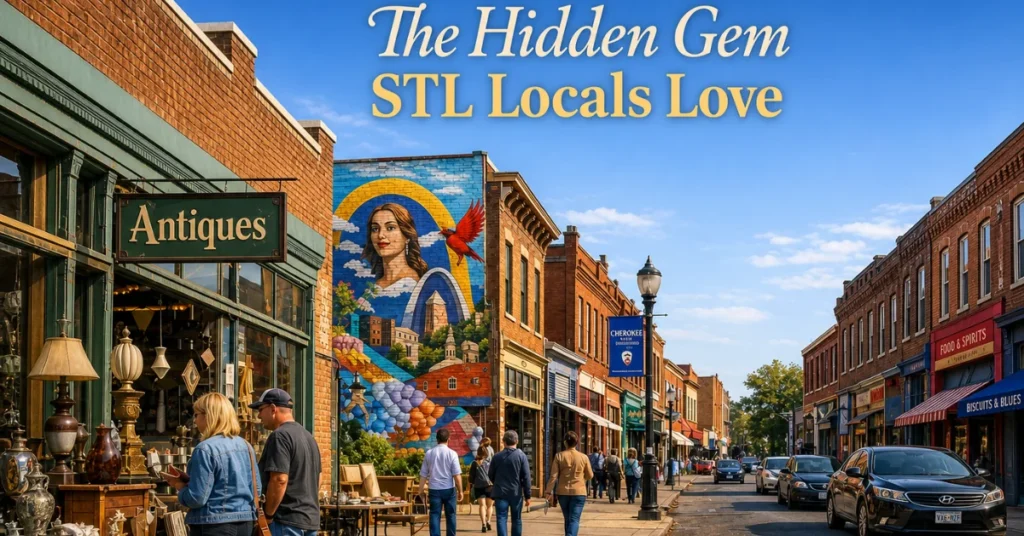
Ask someone who’s lived here their whole life about the real hidden gem STL culture runs on, and they won’t point you toward the Arch. They’ll get quiet for a second, then mention a diner with no sign, a mural alley three blocks off the main strip, or a bar that’s been pouring the same drink since before their parents met. That’s the thing about St. Louis. The postcard attractions are real and worth seeing, but the city’s soul lives somewhere quieter.
This piece skips the top-ten-attractions format you’ve already read a dozen times. Instead, it walks through neighborhoods the way a resident would, one turn at a time, pointing out what actually makes people fall for this river town.
Why Every Hidden Gem STL Discovery Starts Off the Main Strip
St. Louis isn’t a city that markets itself loudly. It’s a working city first, a cultural one second, and a tourist destination a distant third. That order shapes everything.
Neighborhoods here grew up around breweries, rail yards, and immigrant parishes, not around attracting visitors. So when something special exists, it tends to exist for the people who live nearby, not for out-of-towners scrolling a bucket list. Anyone who has spent real time in the city knows the good places rarely have parking lots or gift shops. They have regulars.
That’s exactly why the hidden gem STL search keeps growing. People visit for the Arch and the ballgame, then leave wondering what they missed. Quite a bit, as it turns out.
Cherokee Street: Where the City Shows Its Layers
Start south of downtown on Cherokee Street, and the city stops performing for tourists almost immediately. This stretch runs through what’s historically known as Antique Row, but calling it just an antique district undersells it. Walk it end to end and you’ll pass Mexican bakeries, vintage furniture shops, tattoo studios, and murals that shift block by block.
Standing here, you instantly understand why locals call this the realest part of town. The street carries a significant Latino community, decades of immigrant-owned businesses, and a Cinco de Mayo celebration that pulls in crowds from every corner of the metro. Beneath the street, sealed cave entrances hint at the old brewing tunnels that once kept beer cold before refrigeration existed, a detail most visitors never learn.
If you visit, budget at least two unhurried hours. Grab something at a family-run bakery, browse the antique stores, and don’t rush past the smaller galleries tucked between storefronts. They rotate often and rarely repeat.
Citygarden and the Downtown Spots Nobody Photographs Right
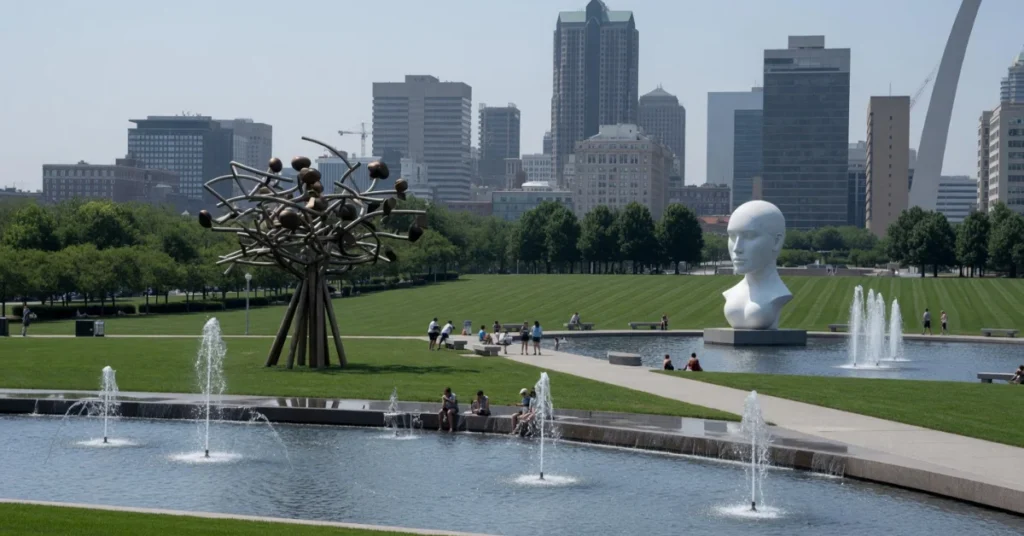
Everyone photographs the Arch. Almost nobody photographs Citygarden the same way, and that’s a shame, because this free downtown sculpture park is one of the more genuinely surprising hidden gem STL finds for anyone walking between meetings or killing an afternoon.
Water features weave between contemporary sculptures across a full city block, and locals treat it like a lunch spot as much as an art destination. The moment you see the fountains running against the downtown skyline, it clicks why office workers cut through here instead of the sidewalk.
A few blocks over, the Campbell House Museum preserves an 1851 mansion almost exactly as the last family left it, down to the original furniture and wallpaper. It’s a smaller, quieter stop than the big-name museums, and that’s precisely the appeal. You won’t fight a crowd to see the parlor.
The Loop, Tower Grove, and Neighborhoods Built for Wandering
Further west, the Delmar Loop earns its reputation honestly. It’s a walkable strip of record shops, bookstores, and late-night food that college students and longtime residents share without much friction. Locals here will tell you the real trick is timing a visit for a weeknight, when the sidewalks thin out and you can actually hear the live music drifting from the smaller venues.
South, Tower Grove Park offers a different kind of hidden gem STL experience entirely. This 289-acre National Historic Landmark District dates back to 1868, when botanist Henry Shaw donated the land to the city, the same Henry Shaw behind the neighboring Missouri Botanical Garden. It’s less photographed than Forest Park but arguably more intimate, with Victorian pavilions scattered across the grounds and a Saturday farmers market that has run every May through October since 2006, drawing vendors from small farms across the region. One look at the tree canopy along the main walking paths and it becomes clear why nearby residents treat this as their backyard rather than a tourist stop.
And then there’s Venice Cafe, a place that resists easy description. Mosaic tile covers nearly every surface inside and out, salvaged objects hang from the ceiling, and a patio built almost entirely from found materials gives the whole spot a genuinely handmade feel. Live music plays most weekends. It’s the kind of place that doesn’t show up on a first-timer’s itinerary but sticks with anyone who wanders in.
The Food Scene That Rarely Makes the Guidebooks
No hidden gem STL conversation stays complete without talking about food, and this is where the city quietly outperforms its reputation. St. Louis-style pizza with Provel cheese gets plenty of attention already, but the more interesting story sits in the neighborhood bakeries and family kitchens that don’t chase tourists at all.
On Cherokee Street, small Mexican bakeries turn out pan dulce and fresh tortillas every morning, often from recipes that came straight from family kitchens in Mexico decades ago. A few blocks over, longtime delis and corner restaurants serve toasted ravioli and gooey butter cake the way locals actually eat them, without the inflated prices of a downtown tourist strip.
Anyone who has worked in the city’s restaurant industry knows the pattern well. The best meals tend to sit a few blocks off whatever street shows up first in a search engine. Ask a bartender or a shop owner where they eat on a night off, and the answer almost never matches what a typical visitor guide recommends.
What the Research Shows
Detailed analysis of St. Louis visitor patterns reveals a consistent gap: most travel coverage clusters around the same five or six attractions, while neighborhood-level dining and arts districts get a fraction of the attention despite drawing steady local traffic year-round. Regional tourism officials have publicly noted renewed momentum in the city’s visitor economy heading into 2026, with new leadership at the destination-marketing level pushing to widen what outsiders associate with St. Louis beyond the Arch and the ballpark.
That pattern tracks with what longtime residents already sense. Business districts like Cherokee Street have drawn fresh investment and a wave of younger business owners in recent years, even as national coverage lags behind. Anyone who has managed a small storefront in one of these corridors knows foot traffic builds slowly, through word of mouth and repeat visits, not through a single viral post.
Hidden Gem STL Quick Reference
Here’s how the five spots covered above stack up against each other, useful for deciding where to spend limited time:
| Spot | Best For | Time Needed | Nearest Access |
|---|---|---|---|
| Cherokee Street | Food, antiques, murals | 2+ hours | Rideshare or car |
| Citygarden | Free midday break, families | 30–60 min | MetroLink (downtown stops) |
| Campbell House Museum | Quiet history, architecture | 45–60 min | Walkable from downtown |
| Tower Grove Park | Outdoor space, Saturday market (May–Oct) | 1–3 hours | Rideshare or car |
| Delmar Loop | Nightlife, live music, shopping | 2+ hours | MetroLink (Delmar Loop stop) |
| Venice Cafe | Evening atmosphere, live music | 1–2 hours | Rideshare or car |
A Practical Hidden Gem STL Route for a First Visit
For anyone building an actual itinerary rather than just reading for inspiration, here’s a sequence that works on foot and by rideshare without much backtracking:
- Morning: Citygarden and the Campbell House Museum downtown
- Midday: Lunch and browsing on Cherokee Street
- Afternoon: Tower Grove Park, especially if a Saturday market is running
- Evening: Dinner and live music along the Delmar Loop or a stop at Venice Cafe
That loop covers roughly four distinct neighborhoods without requiring a car for most of it, and it hits a genuine hidden gem STL spot in every stop rather than clustering everything downtown.
Who Should Prioritize This Kind of Trip
Not every traveler wants the same experience, and that’s worth acknowledging honestly. First-time visitors with only a day or two should still see the Arch and Forest Park; those anchor the city for good reason. But repeat visitors, longer weekend trips, or anyone traveling with a local friend will get far more out of prioritizing neighborhoods over checklist attractions.
Families with younger kids might lean toward Citygarden’s interactive fountains and Tower Grove’s open lawns. Couples or solo travelers chasing atmosphere will find more payoff on Cherokee Street after dark or during a Venice Cafe show. Food-focused travelers should treat Cherokee Street’s bakeries and family kitchens as a full afternoon, not a quick stop between bigger plans.
Challenges Worth Knowing Before You Go
None of this is without a few practical wrinkles. Parking on Cherokee Street can get tight during weekend events, and some of the smaller shops keep irregular hours, so calling ahead or checking a current schedule saves a wasted trip. Public transit covers downtown and the Loop well through MetroLink, but reaching Tower Grove or deeper into South City usually means a rideshare or a car.
Weather matters more than first-time visitors expect, too. Summers run hot and humid, which makes early mornings or evenings the better window for outdoor stops like Citygarden and Tower Grove Park.

Conclusion
The real hidden gem STL travelers keep searching for isn’t a single address. It’s a pattern: neighborhoods that grew organically, businesses run by the same families for decades, and public spaces that locals actually use instead of just photograph. Skip the version of St. Louis built only for a layover, and the city opens up fast: mosaic-covered cafes, sculpture parks with no entry fee, and a street market that’s been running since long before anyone thought to call it a tourist attraction.
Come with a little time to wander instead of a rigid checklist, and St. Louis tends to reward that patience.
FAQs
Is there really a hidden gem STL locals keep to themselves?
Not one single spot, honestly. It’s more that entire neighborhoods like Cherokee Street and Tower Grove get overlooked because they don’t have the marketing budget of the big attractions downtown.
What’s the best time of year to explore these neighborhoods?
Late spring through early fall works best for outdoor spots like Citygarden and Tower Grove Park, though Cherokee Street’s shops and cafes run year-round regardless of weather.
Do I need a car to see these places?
Downtown and the Delmar Loop are accessible by MetroLink and on foot. Cherokee Street and Tower Grove Park are easier to reach with a rideshare or car, especially outside daytime hours.
Are these areas safe for visitors?
Like any city neighborhood, it helps to stay aware of your surroundings, especially at night, and to check current local advisories before visiting less-touristed areas.
Is Venice Cafe kid-friendly?
It leans toward an adult, evening crowd with live music, so it’s better suited to a night out than a family stop. Citygarden and Tower Grove Park are the stronger picks for visiting with kids.