
New York doesn’t hide much. The skyline announces itself from three states away, and Times Square makes sure you never forget you’re a tourist. But ask anyone who’s lived here more than a year where they actually spend their Sunday afternoons, and you’ll get a different map entirely. The hidden gems in nyc that locals guard aren’t secret because nobody’s found them. They’re secret because most visitors never think to look past the ten attractions every guidebook repeats.
This piece isn’t another list of the same five spots recycled across a dozen travel blogs. It’s built from what actually holds up in 2026, checked against what’s changed, what’s closed, and what’s quietly become the neighborhood favorite while nobody was watching.
What Counts as One of the Hidden Gems in NYC
Not every under-visited spot deserves the label. A hidden gem, in the real sense, is a place with genuine substance that simply doesn’t have the marketing budget or Instagram algorithm boost of the Empire State Building.
Some of these spots are physically hard to find. Others are hiding in plain sight, tucked inside buildings tourists walk past without a second glance. A few are free. One or two cost less than a subway ride. What they share is a lack of lines and a surplus of atmosphere.
Anyone who has spent a weekend crisscrossing Manhattan on foot knows the difference between a place that feels curated for visitors and one that feels lived in. That difference is the whole point here.
The Cloisters, Way Uptown
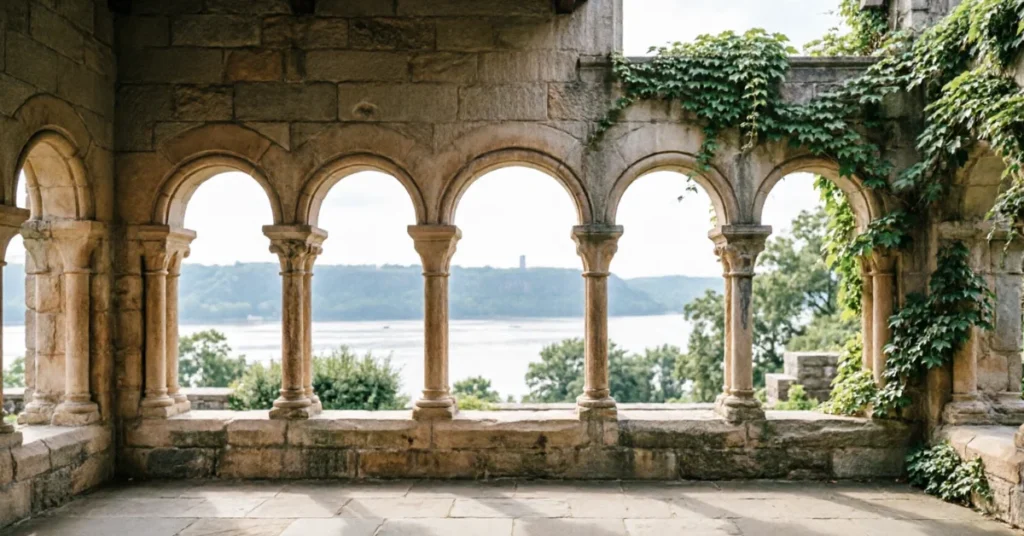
Most first-time visitors never make it above 96th Street, which is exactly why Fort Tryon Park’s medieval museum stays calm even on a Saturday. Run by the Met, the Cloisters is assembled from pieces of actual European monasteries: stone arcades, herb gardens, and the famous unicorn tapestries hanging in dim, cool rooms.
Standing in the arcade with the Hudson visible through the arches, it’s easy to forget you’re still in Manhattan at all. Locals who make the trek usually pair it with a walk through the park’s wooded paths, and entry is included with a same-day Met ticket, so a single admission covers both. The A train to 190th Street gets you there directly, and weekday mornings are the quietest window by far.
Greenacre Park, Midtown’s Waterfall Hideaway
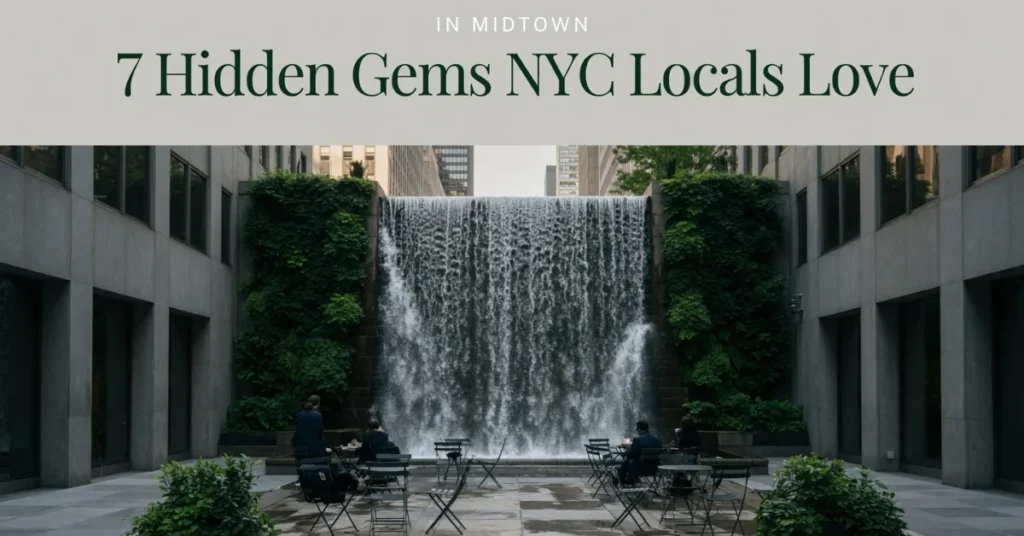
Squeezed between office towers on East 51st Street sits a pocket park barely bigger than a tennis court, with a twenty-five-foot waterfall crashing down one wall. Office workers eat lunch here on movable chairs while the water drowns out the traffic a few feet away.
It costs nothing, it’s open most of the year, and almost nobody outside the neighborhood knows it exists. That contrast, a full-volume waterfall wedged between skyscrapers, is what makes it one of the more surprising hidden gems in nyc for anyone tired of Bryant Park’s crowds.
The Elevated Acre, Lower Manhattan
Financial District workers know this one; almost nobody else does. Take an escalator up from Water Street and you land on an elevated wooden deck with unobstructed views of the East River and Brooklyn Heights, plus a small amphitheater and turf lawn.
It’s the kind of spot where you can watch the Staten Island Ferry cross the harbor without a single person asking to take your photo. Sunset hits differently here than it does from the crowded piers a few blocks over.
Little Island at Pier 55
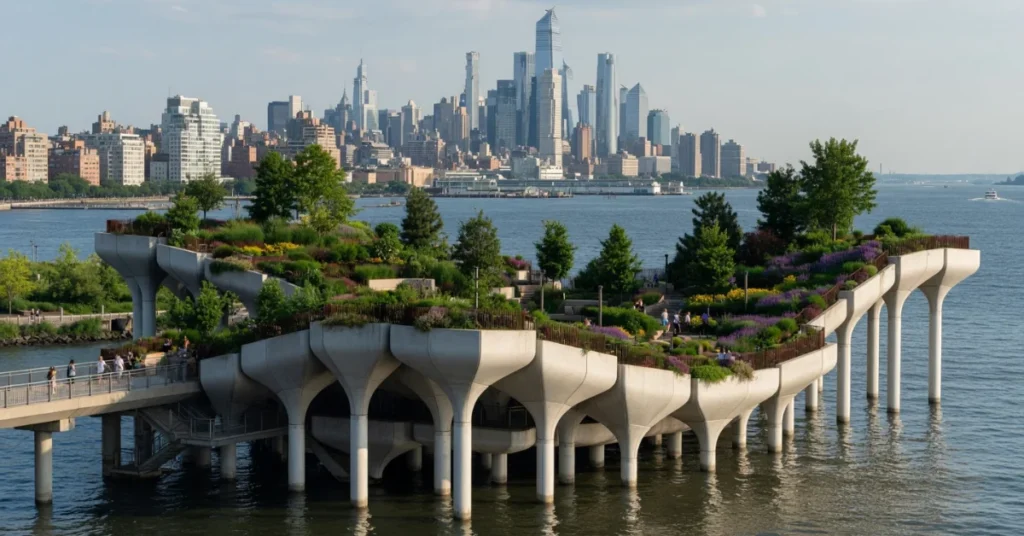
Floating above the Hudson on a cluster of futuristic concrete pillars, Little Island is one of the newer additions to this list, and it still flies under most first-timers’ radar. The park feels almost sculptural from a distance, all curved planters and elevated walking paths, with sweeping views back toward the Manhattan skyline and across to New Jersey.
Entry is free most of the year, though some evening performances at the amphitheater require a ticket. It’s smaller and calmer than the High Line a few blocks over, which makes it an easy stop for anyone who wants river views without shuffling through a crowd the entire way.
Museums That Feel Like Discoveries, Not Detours
Beyond the Met and MoMA, New York’s smaller museums do something the giants can’t: they tell one focused, human-scale story instead of trying to cover everything at once.
The Morgan Library on Madison Avenue holds illuminated manuscripts inside a wood-paneled study that once belonged to financier J.P. Morgan himself. The Tenement Museum on the Lower East Side runs guided tours through restored immigrant apartments, giving a texture to early-1900s New York that no wall placard ever could. The Merchant’s House Museum preserves an 1830s Greenwich Village home almost exactly as it was left, furniture and all.
Anyone who has toured these smaller institutions back to back describes a completely different pace than the big-museum crush. No sprinting between wings, no crowd management, just enough time to actually look.
Roosevelt Island Tram
The tram gliding beside the Queensboro Bridge costs the same as a subway swipe and delivers a Midtown skyline view most observation decks charge thirty dollars for. It’s four minutes each way, and on a clear evening the ride rivals anything on the official sightseeing circuit.
Beyond Manhattan: The Boroughs Do It Better
A huge share of the hidden gems in nyc worth chasing aren’t in Manhattan at all. Brooklyn’s Green-Wood Cemetery spans 478 acres of Victorian architecture, panoramic Manhattan views, and more historical residents than most people expect from a graveyard. City Island in the Bronx feels like a New England fishing village grafted onto the five boroughs, complete with seafood shacks and a walkable waterfront that has nothing in common with the rest of the city.
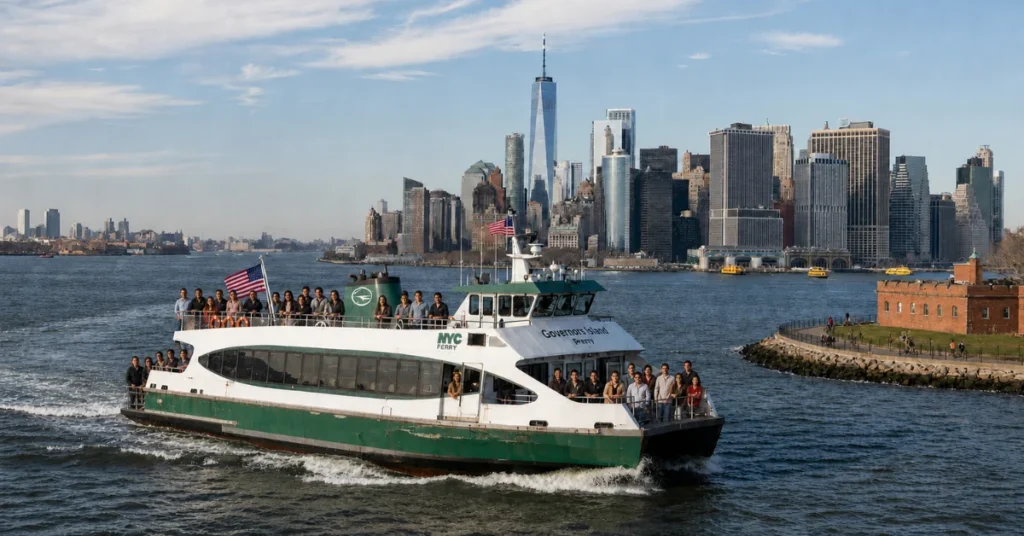
Governors Island, a short ferry ride from Lower Manhattan, turns into a car-free summer escape with hammock groves and repurposed military buildings that most Manhattan-only itineraries skip entirely.
Recent visitation data from the city’s tourism board points to roughly 65 million people visiting New York in 2025, with domestic travel climbing toward a new record and international numbers still working back toward pre-pandemic levels. As that number keeps growing into 2026, the pressure on the ten or so headline attractions keeps growing too, which is exactly why spreading out into these quieter corners matters more than ever.
Quick Reference: Hidden Gems in NYC at a Glance
Anyone planning a short trip rarely has time to read every section closely, so here’s the same information in a scannable format.
| Spot | Borough | Cost | Best For | Time Needed |
|---|---|---|---|---|
| The Cloisters | Manhattan (Uptown) | Included with same-day Met ticket | History lovers, quiet mornings | 2–3 hours |
| Greenacre Park | Manhattan (Midtown) | Free | Quick escape, solo travelers | 20–30 minutes |
| The Elevated Acre | Manhattan (FiDi) | Free | Sunset views, lunch breaks | 30–45 minutes |
| Little Island | Manhattan (West Side) | Free (some evening shows ticketed) | Architecture, skyline views | 1–2 hours |
| Green-Wood Cemetery | Brooklyn | Free | History, architecture walks | 2–3 hours |
| City Island | The Bronx | Free (food extra) | Seafood, small-town feel | Half day |
| Governors Island | Manhattan ferry | Low-cost ferry fare | Families, summer outings | Half day |
| Roosevelt Island Tram | Manhattan/Queens | Standard subway/OMNY fare | Budget skyline views | 10 minutes each way |
Who Should Bother Seeking These Out
First-time visitors chasing a checklist of icons probably won’t prioritize a waterfall park or a cemetery walk, and that’s fine. But repeat visitors, long weekenders, and anyone who’s already photographed the skyline from the Top of the Rock get real value from this list.
Families traveling with older kids find the Transit Museum’s decommissioned subway cars genuinely engaging in a way screens can’t compete with. Solo travelers looking for quiet find Greenacre Park or the Elevated Acre do more for a frazzled nervous system than another crowded plaza ever could. Budget travelers benefit most of all. A large share of these spots are either free or cost less than a movie ticket.
What the Research Shows
Detailed analysis of New York’s evolving tourism patterns shows a clear shift toward neighborhood-based, experience-driven itineraries rather than single-landmark checklists. Industry travel forecasts for 2026 point to visitors increasingly favoring flexible, borough-spanning trips over rigid single-district plans, partly driven by transit improvements that have made outer boroughs easier to reach on a whim.
That shift lines up with what longtime residents have said for years: the city’s best moments rarely happen where the tour buses stop. And that’s the thing. The spots that stay quiet tend to stay quiet precisely because finding them takes a little intention, which filters out anyone not genuinely curious.
There’s also a timing angle worth flagging for anyone reading this in the second half of 2026. The FIFA World Cup final wrapped up at MetLife Stadium on July 19, and the crowd surge that came with it has already started to ease across Manhattan and the surrounding boroughs. Late summer and early fall 2026 sit in a genuine window where the headline attractions are decompressing from tournament-level foot traffic, but the wider tourism season is still active. Anyone planning an autumn trip is arriving right as the city settles back into its normal rhythm, which makes exploring beyond the ten famous landmarks easier than it was a few months earlier.
Practical Tips for Visiting Without Ruining the Magic
A few of these places survive on low foot traffic, so treat them with the same care locals do.
- Visit Greenacre Park and the Elevated Acre on weekdays when possible; weekends bring bigger crowds from nearby residents.
- Book Tenement Museum tours in advance since they’re guided-only and sell out during peak season.
- Check individual opening days for smaller museums before making the trip; several close Mondays or Tuesdays.
- Combine the Cloisters with a same-day Met ticket to avoid paying for entry twice.
- Bring cash or a subway card for the Roosevelt Island Tram, since it uses the same MetroCard/OMNY system as the subway.
Challenges Worth Knowing About
None of this comes without trade-offs. Some of these locations have limited hours, and a few close entirely during winter months. City Island and Governors Island both require extra travel time that a Midtown-only itinerary won’t need to budget for. And there’s an honest tension in even writing about hidden gems in nyc: the more attention a quiet spot gets, the less quiet it stays. That’s worth keeping in mind before posting the exact bench you found at Greenacre Park to a following of thousands.
Where This Is Headed
As visitation climbs back toward and past pre-pandemic records through 2026, expect more of the city’s marketing dollars to actively promote outer-borough destinations, partly to relieve pressure on Midtown and partly because travelers are asking for it. Neighborhood-level content, walking tours built around specific blocks, and borough-focused guides are already growing faster than generic “top ten NYC attractions” content, and that trend shows no sign of slowing down.
FAQs
Are these hidden gems in nyc actually free to visit?
Several are, including Greenacre Park, the Elevated Acre, and Green-Wood Cemetery. Museums like the Cloisters and Morgan Library charge admission, though student and evening discounts are often available.
What’s the best time of year to visit these spots?
Late spring through early fall works best for outdoor locations like Governors Island and City Island, since some services close for winter. Indoor spots like the Morgan Library and Tenement Museum work year-round.
Do I need a car to reach places like City Island?
No. City Island is accessible by subway and bus from the Bronx, though it takes patience. Governors Island and Roosevelt Island both run on ferries or trams, no car required.
Are these places safe for solo travelers?
Generally yes. Most sit in well-trafficked residential or commercial areas. Standard city awareness applies, especially after dark in less populated spots like Fort Tryon Park.
Can I fit several of these into one day?
Realistically, two or three. Uptown spots like the Cloisters pair well together, while Lower Manhattan locations like the Elevated Acre group naturally with a Financial District walk