
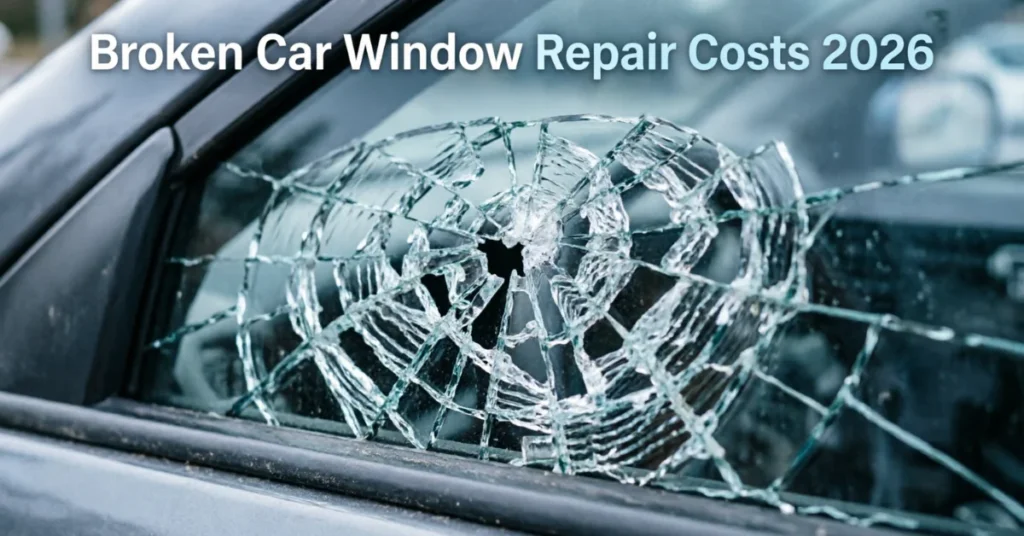
A rock kicks up on the highway. A window won’t roll up anymore. Someone smashes a side window overnight and takes off with whatever was on the seat. However it happened, the question that follows is always the same: how much to fix a broken window car owners are staring at right now, and can it wait until payday?
The short version is that it depends heavily on which window broke and what kind of car you drive. But there’s a real range here, and knowing it before you call a shop means you won’t get quoted a number that sounds made up.
What to Do Right After Your Window Breaks
Before you even think about cost, a few quick steps protect both your car and your claim.
- Clear the glass first. Tempered glass shatters into small, dull chunks rather than sharp shards, but it still needs clearing off seats and floor mats before anyone sits down.
- Cover the opening. Plastic sheeting and heavy tape over a broken side window or shattered rear window keeps weather and dust out until a shop can see the car. Most insurers count this as a reasonable protective step, not something that voids a claim.
- Don’t leave valuables visible. A broken window left overnight is an open invitation. Move anything worth taking into the trunk or bring it inside.
- Skip driving with a blocked view. A cracked side window is usually fine to drive on short-term. A windshield crack sitting in your direct line of sight isn’t. Get it looked at before you get back on the road.
How Much to Fix a Broken Window Car: A Cost Breakdown by Type
Side windows are the cheapest fix in almost every case. Rear windows cost more because of the defrosting grid wired into the glass. Windshields sit at the top of the ladder, especially once cameras and sensors get involved.
| Window Type | Typical Cost | Notes |
|---|---|---|
| Quarter/vent glass | $100–$300 | Small fixed panels, cheapest fix |
| Side window (door) | $100–$450 | Most common repair |
| Rear window | $200–$1,000 | Pricier due to defroster grid wiring |
| Windshield (basic) | $250–$600 | Older cars, no sensors |
| Windshield (ADAS-equipped) | $1,000–$2,500+ | Camera recalibration adds cost |
| Power window motor/regulator | $100–$300+ | Not a glass problem, mechanical fix |
That last row trips people up constantly. A window that won’t roll up isn’t always a glass issue. Nine times out of ten it’s a dead motor or a broken regulator, and that’s a $100 to $300 mechanical repair, not a glass replacement at all.
So when someone asks how much to fix a broken window car repairs will cost, the honest answer is a range, not a flat number. It moves with the window, the vehicle, and whether any electronics are riding along with the glass.
What Actually Moves the Price Up or Down
A few factors decide where you land inside these ranges, and they’re worth knowing before you get a quote.
Vehicle age and rarity matter more than most people expect. A ten-year-old sedan uses widely stocked aftermarket glass that’s cheap to source. A newer model, or anything imported or low-volume, often needs glass ordered specifically for that trim, which adds both cost and wait time.
OEM versus aftermarket glass is the second big lever. OEM (original equipment manufacturer) glass matches the factory spec exactly and costs more. Aftermarket glass is manufactured to fit but isn’t made by the original supplier. It’s usually 20-40% cheaper and works fine for most drivers, though shops handling ADAS-equipped vehicles sometimes push OEM to avoid calibration headaches.
Camera and sensor recalibration deserves its own callout. On a windshield with lane-assist or automatic braking cameras built in, recalibration alone has been quoted around $1,500 in industry studies. That’s on top of the glass itself, and it’s the single biggest reason newer-car windshield quotes look so much higher than what a decade-old sedan would cost.
Labor rates shift by region too. A shop in a major metro area with high overhead will charge more per hour than a small-town glass installer, even for the identical job.
Mobile service versus in-shop installation rarely changes the base price much, but same-day mobile appointments sometimes carry a small convenience fee. Anyone who’s dealt with a cracked windshield on a road trip knows that fee is worth paying just to get back on the road.
How Much to Fix a Broken Window Car Costs When Insurance Gets Involved
This is where a lot of drivers save real money without realizing it. Comprehensive coverage, the part of a policy that handles non-collision damage like theft, vandalism, weather, and falling debris, generally pays for glass repair and replacement, minus your deductible.
Comprehensive coverage itself costs around $339 a year on average with a $500 deductible, according to industry analysis of current rates. Stack that against a $1,000 windshield job and the math usually favors filing a claim, assuming your deductible sits below the repair cost.
Three states currently stand out for a reason: Florida, Kentucky, and South Carolina all restrict insurers from applying a deductible to windshield claims, so comprehensive coverage effectively pays the full bill there for qualifying damage. Everywhere else, you’re on the hook for the deductible first, which typically ranges from $100 to $1,000 depending on the policy.
Some insurers also sell a standalone “full glass” or “$0 deductible” add-on specifically for windows and windshields. It costs a little extra on the premium but removes the deductible entirely for glass claims, and drivers who’ve filed more than one glass claim in a short window often say it paid for itself fast.
One thing worth checking before filing anything: a single glass claim rarely raises your rate, since insurers generally treat it as low-risk. Multiple claims in a short stretch are what tend to draw scrutiny. If your deductible is higher than the repair cost itself, filing a claim doesn’t make sense. You’d just be paying the shop directly for less than what the deductible would cost.
If you’re driving a rental car when the damage happens, don’t assume you’re stuck paying out of pocket either. Rental car protection plans and some personal auto policies extend to rentals, separate from your own vehicle’s comprehensive coverage. It’s worth a call to the rental company before you pay anything at the counter.
DIY Kits vs. Calling a Professional
Small rock chips smaller than a quarter, positioned outside the driver’s direct line of sight, are genuinely fixable with a $15-30 resin kit from an auto parts store. It’s a reasonable first move if you catch the damage early.
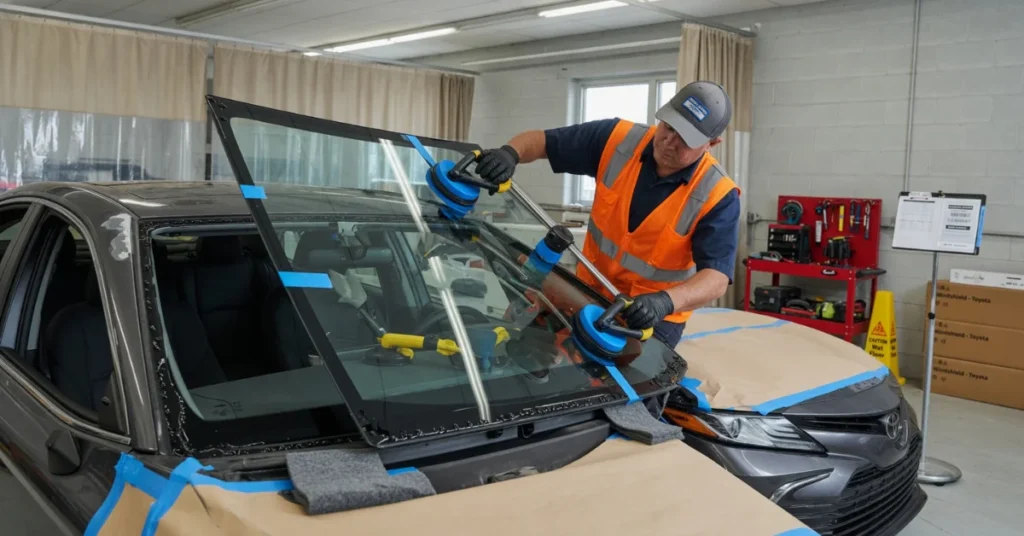
Anything beyond that, a spiderweb crack, a fully shattered pane, or damage that’s spread more than a few inches, needs a professional. Auto glass installers who handle this daily know that a bad DIY attempt on a larger crack can trap moisture, weaken the seal, and force a full replacement anyway, which ends up costing more than just booking the shop in the first place.
Safety plays into this more than people assume. Windshields are structural on modern vehicles. They help support the roof in a rollover and give airbags something to deploy against. That’s not a spot to cut corners on.
Who Needs to Pay Closer Attention to This
Owners of newer vehicles with driver-assist cameras face the steepest bills, since almost every windshield swap on those cars now includes a recalibration step. It’s worth asking a shop upfront whether that’s included in their quote or billed separately, because some list it as an add-on.
Fleet and rideshare drivers deal with this more often than average, simply from higher mileage and more time on highways where debris kicks up. Budgeting for at least one glass repair a year isn’t unreasonable if you’re logging serious road time.
Renters and lessees should check their lease agreement. Some require OEM glass specifically, which rules out the cheaper aftermarket option even if the driver would otherwise choose it.
Anyone driving a rental at the time of the break falls into a different bucket entirely, and it’s worth checking rental coverage before assuming the repair bill lands on your own policy.
What the Research Shows
Detailed analysis of recent industry pricing data shows a clear pattern: the gap between basic and tech-heavy repairs has widened noticeably over the past few years, mostly driven by the spread of driver-assist cameras into mainstream trim levels rather than just luxury models. A decade ago, almost every windshield swap cost roughly the same regardless of vehicle. That’s no longer true. The split between a $300 basic install and a $1,000+ camera-equipped one has become the norm rather than the exception heading into 2026.
Claim data tells a similar story from a different angle. Comprehensive claim frequency, which includes glass losses, climbed to its highest level in 15 years as of the most recent full-year figures. That lines up with what shops report seeing on their intake forms: most walk-in customers are filing through insurance rather than paying cash, especially for windshields.
Looking Ahead
As more vehicles ship standard with cameras and sensors behind the glass, expect windshield-specific costs to keep climbing while side and rear window prices stay comparatively flat. That’s already the direction pricing has moved through 2025 and into 2026, and there’s no sign of it reversing.
So when the question is how much to fix a broken window car repair will run, the real answer sits somewhere between a quick $150 side-glass swap and a four-figure windshield job with recalibration. Knowing which bucket your car falls into, whether insurance covers the gap, and what to do in the first ten minutes after it breaks is what turns a stressful surprise into a manageable errand.
FAQs
Is it cheaper to repair or replace a broken car window?
Repair only works for small chips or cracks under a couple of inches, and it’s always cheaper, often $50-100. Anything larger, or any fully shattered pane, requires full replacement.
Does insurance cover a broken car window?
Comprehensive coverage generally covers it, minus your deductible, if the damage came from something other than a collision with another vehicle. Collision coverage applies instead if another car caused it.
How long does it take to fix a broken car window?
Side and rear windows usually take 30-60 minutes. Windshields take longer, often 1-2 hours, plus extra time if the glass needs recalibration for cameras or sensors.
Can I drive with a broken car window?
A cracked side window that’s still intact is usually safe short-term. A shattered window, or any windshield crack blocking your view, should get fixed before driving again.
Will filing a glass claim raise my insurance rate?
A single glass claim rarely does. Insurers generally treat it as low-risk, though multiple claims in a short period can prompt a rate review.