

Stand on a beach in the Bahamas in July and the water feels almost too warm to be real. Fly to Banff the same week and you’ll need a fleece by sunset. That gap is exactly why picking the best places to travel in July takes more thought than just checking a calendar and booking the first flight you find.
July sits at the peak of the northern hemisphere’s summer, which means the planet basically splits into two camps. One half is soaking up long daylight hours on Mediterranean coastlines. The other half is escaping the heat in mountains, fjords, and far northern latitudes where summer feels more like a gentle reprieve than a scorcher. Neither approach is wrong. It just depends on what kind of traveler you are.
Why July Splits the World Into Two Travel Seasons
Here’s the thing about July: it’s brutal in some places and perfect in others, often just a few hundred miles apart.
Southern Europe, much of Southeast Asia, and the Caribbean hit their hottest stretch of the year. Meanwhile, places like Iceland, Norway, and the Canadian Rockies are having their mildest, greenest month, with daylight stretching well past nine at night.
Anyone who has planned a summer trip around Europe knows this split firsthand. Rome in July can feel unbearable by early afternoon, while a few hours north, the Swiss Alps stay cool and walkable all day. That contrast is the backbone of any honest guide to the best places to travel in July.
July Weather at a Glance
Before picking a destination, it helps to see how the month actually plays out on the ground. Here’s how six popular July destinations compare on temperature, crowds, and rough daily cost.
| Destination | Best For | Avg. July Daytime High | Crowd Level | Rough Daily Budget (per person) |
|---|---|---|---|---|
| Santorini, Greece | Beach, sunsets | 28–29°C (82–84°F) | Very high | $180–320 |
| Bahamas (Nassau/Andros) | Diving, snorkeling | 30–32°C (86–90°F) | High (Nassau), low (Andros) | $150–280 |
| Bali, Indonesia | Beach + culture | 27–28°C (81–82°F) | High | $60–120 |
| Zanzibar, Tanzania | Beach, dry season | 28°C (83°F) | Moderate | $90–160 |
| Banff, Canada | Hiking, alpine lakes | 22°C (72°F) | High | $150–250 |
| Iceland (Reykjavik) | Waterfalls, road trips | 14°C (57°F) | High | $180–300 |
Budget figures are rough mid-range estimates covering lodging, food, and local transport, and they’ll swing with how far in advance you book.
Best Places to Travel in July for Beach and Sun
If heat and open water are what you’re after, July rewards you generously.
- The Greek Islands — Santorini and Mykonos hit their stride with dry skies, warm Aegean water, and long golden evenings perfect for cliffside dinners.
- Zanzibar — This Tanzanian island sits in the middle of its dry season during July, with white sand and warm, clear water for diving and snorkeling.
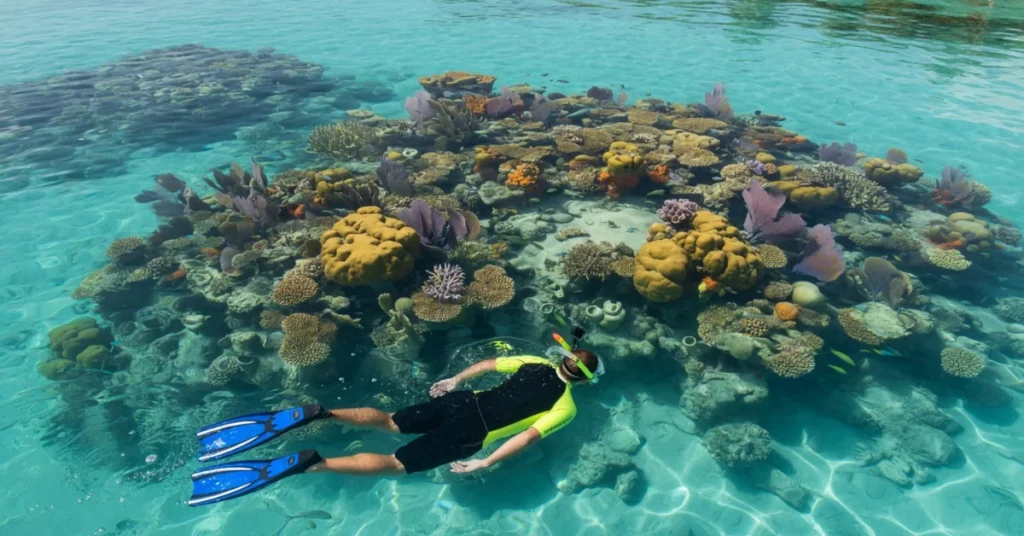
- The Bahamas — Less crowded than Nassau’s cruise-heavy strip, with calm seas and strong visibility for diving off Andros and manta ray sightings near Bimini.
- Bali — July falls in the dry season, giving beachgoers sunny days on the coast and travelers heading inland clear skies over the rice terraces near Ubud.
Locals in these regions will tell you July isn’t just about lounging. It’s peak season for water sports, boat trips, and evening markets that only really come alive once the heat breaks.
Best Places to Travel in July for Cooler Climates and Adventure
Not everyone wants sunscreen and sand. For travelers chasing cooler air and dramatic scenery, July opens up regions that are locked up by snow the rest of the year.
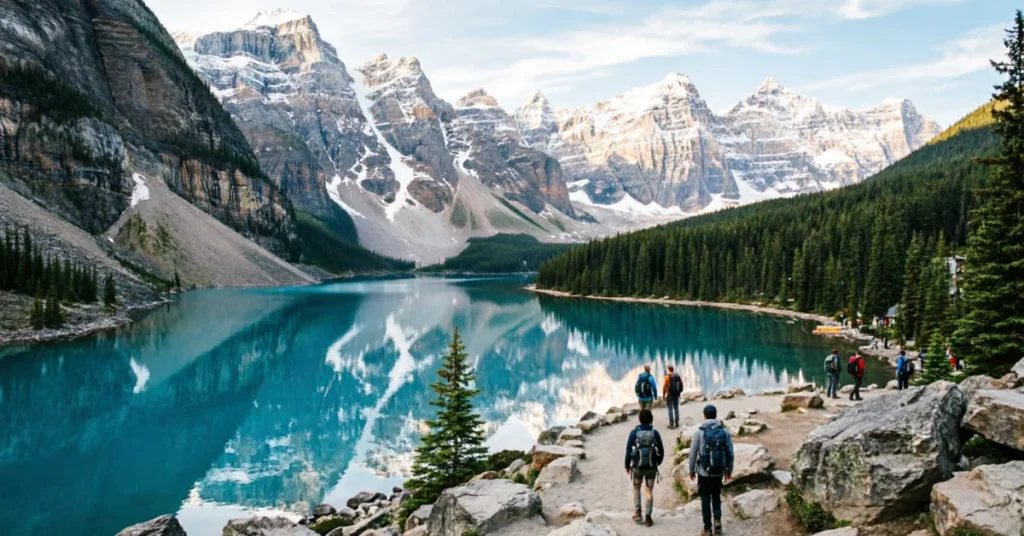
Iceland is arguably at its most accessible this month, with near-endless daylight making it possible to drive the Ring Road and still catch waterfalls glowing at ten at night. Banff National Park in Alberta hits its short but glorious hiking window, with alpine trails finally clear of snow and turquoise lakes at their most vivid, and average highs hovering around 22°C (72°F).
Norway’s fjords, Canada’s Northwest Territories, and even parts of New Zealand’s South Island round out this cooler-weather category. One look at Moraine Lake in July and it becomes clear why photographers plan entire trips around this single month.
Festivals, Culture, and City Escapes
July isn’t only a weather story. It’s also a festival calendar.
Montreux, Switzerland, turns into a music destination for weeks as the Montreux Jazz Festival draws visitors from across Europe, with the Alps and Lake Geneva as a backdrop. Bar Harbor, Maine, leans into small-town Americana with a Fourth of July parade, whale watching tours, and lobster rolls by the harbor.
For city breaks, London, Oslo, and Auckland manage to stay lively without becoming unbearable in the heat, and each offers a different pace: London’s museums and markets, Oslo’s waterfront and fjord cruises, Auckland’s harbor life heading into its own cooler season.
The Overtourism Problem Nobody Mentions
Here’s a gap most July travel guides skip entirely: several of the destinations on every shortlist are actively limiting how many people can show up.
Santorini enforces a hard daily cap of 8,000 cruise passengers for the 2026 season, tightened from previous years, along with a per-person cruise levy that runs up to €20 in peak summer and drops sharply in shoulder months. Scheduled cruise arrivals to the island have dropped by roughly 18% compared to 2025, which in practice means shorter queues at sunset viewpoints and calmer streets in Oia and Fira. New hotel construction on the island is also capped under a 2026 spatial planning framework, so the crowding problem isn’t expected to simply rebound once rules loosen.
This matters for trip planning in a very direct way. If your idea of the best places to travel in July includes a quiet caldera sunset, arriving by ferry or plane rather than cruise ship, and visiting early or late in the day, will get you closer to that than the postcard version ever did.
Southern Hemisphere Options Most Guides Skip
Nearly every July roundup focuses on northern-hemisphere summer, but that leaves out a genuinely useful category: winter destinations in the southern hemisphere.
New Zealand’s South Island is deep in ski season by July, with Queenstown running full lift operations and noticeably thinner crowds compared to its summer months. South Africa’s game reserves also shift into their dry winter season around this time, and thinner vegetation actually makes wildlife easier to spot on safari. Patagonia, at the southern tip of South America, is cold and quiet in July, better suited to travelers chasing solitude than beach weather, but genuinely rewarding for anyone drawn to dramatic, empty landscapes.
These aren’t destinations that show up on most “best of July” lists, mostly because they don’t fit the sun-and-sand narrative. For travelers willing to pack differently, they’re a real alternative.
What the Research Shows
Detailed analysis of global travel search trends shows July consistently ranks among the top two or three months for both leisure and family travel bookings, largely because it lines up with school summer breaks across North America and Europe.
Industry travel guides published for 2026 point to a fairly consistent shortlist this year: Switzerland, Bali, Canada, Italy, Japan, Iceland, and Greece keep showing up across multiple rankings, which suggests these destinations aren’t just trendy picks but places genuinely built for the month’s conditions.
Examining crowd and pricing patterns closely also reveals a pattern experienced travelers already know: destinations at their absolute weather peak, such as Greece, Bali, and the Alps, tend to charge peak prices too, while shoulder-appropriate spots like Andros in the Bahamas or the Canadian north offer similar scenery for noticeably less.
Who Should Pick Which Kind of July Trip
Not every traveler wants the same thing out of the month, so it helps to match the trip type to the traveler.
Families with school-age kids tend to gravitate toward beach destinations with easy logistics, think Greece or the Bahamas, where flights are direct and activities require little planning. Hikers and outdoor-focused travelers get more value chasing the short cool-weather window in Iceland, Banff, or Norway, since that access disappears again by early autumn. Culture-first travelers do best building a trip around a specific event, like Montreux’s festival calendar, rather than just picking a country and hoping something is happening.
Budget-conscious travelers should note that quieter alternatives exist almost everywhere. Andros instead of Nassau. Smaller Greek islands instead of Santorini. Same climate, noticeably lighter crowds, and often better value.
Practical Planning: Visas, Packing, and Booking Timing
A few practical details rarely make it into destination roundups, but they change how smooth the trip actually feels.
Visa basics. Greece, Switzerland, and Iceland fall under the Schengen area, so most Western travelers can enter visa-free for short stays, though ETIAS pre-authorization is expected to apply to non-EU visitors once fully rolled out. Bali requires a visa-on-arrival or e-visa for most nationalities. Canada requires either a visitor visa or an Electronic Travel Authorization (eTA) for visa-exempt travelers arriving by air. Always confirm current entry rules directly with the destination country’s official immigration site before booking, since requirements shift.
Packing by climate type.
- Humid tropical (Bali, Zanzibar, Bahamas): lightweight breathable fabrics, reef-safe sunscreen, a light rain layer for sudden downpours.
- Dry Mediterranean heat (Santorini, Greek Islands): sun hat, high-SPF sunscreen, comfortable walking shoes for cobblestone streets, a light layer for breezy evenings.
- Alpine and northern (Banff, Iceland, Norway): layers are non-negotiable, waterproof outer shell, sturdy hiking shoes, and a warm layer even in peak summer.
Booking timing. Flights and hotels for July travel typically get noticeably cheaper when booked two to three months ahead rather than at the last minute, and destinations with new caps or levies, like Santorini, are worth booking even earlier since availability is now genuinely limited rather than just marketed that way.
Common Mistakes When Planning a July Trip
A few missteps show up again and again in July travel planning, and they’re worth naming directly.
First, underestimating humidity in tropical destinations. Dry season doesn’t always mean comfortable, and destinations like Bali or Zanzibar still run humid even without heavy rain. Second, booking peak-season hotspots without checking festival calendars, which can double accommodation prices overnight in places like Montreux. Third, assuming “summer” means warm everywhere. Southern hemisphere destinations, including parts of New Zealand, are in winter during July, and packing for the wrong season is a surprisingly common error.
Anyone who has managed a multi-stop summer itinerary knows the real skill isn’t picking exciting places. It’s sequencing them so the weather, crowds, and budget all line up.
Looking Ahead to July 2026
Interest in shoulder-season alternatives has grown steadily heading into 2026, with more travelers actively choosing quieter islands and cooler-climate destinations over the most photographed hotspots. That shift doesn’t mean the classics are losing appeal. Santorini, Bali, and the Swiss Alps remain firmly on most shortlists. It just means the definition of the best places to travel in July has widened to include destinations that used to fly under the radar, plus a new layer of visitor caps and levies that didn’t exist a few years ago.
Final Thoughts
Choosing among the best places to travel in July really comes down to one honest question: do you want heat, or do you want to escape it? Once that’s settled, the rest of the planning, from festivals and crowd caps to budget and packing, tends to fall into place fairly naturally. Whether that means diving off a quiet Bahamian reef or hiking a still-snow-dusted trail above Moraine Lake, July rarely runs out of good options.
FAQs
Is July too hot to travel to Southern Europe?
It’s warm, sometimes intensely so in inland cities, but coastal areas and islands stay comfortable thanks to sea breezes, and evenings cool down enough for outdoor dining and sightseeing.
Where can I avoid crowds in July?
Quieter alternatives to major hotspots work well, such as Andros over Nassau, or lesser-known Greek islands over Santorini and Mykonos, where the scenery is similar but the crowds are lighter. Santorini’s new cruise cap has also genuinely reduced peak-day congestion compared to a few years ago.
What’s the best destination for cooler weather in July?
Iceland, Norway, and Banff National Park in Canada offer mild temperatures, long daylight hours, and hiking conditions that only last a short window each year.
Is July a good month for a family beach vacation?
Yes. It lines up with school summer breaks in most of North America and Europe, and destinations like Greece, the Bahamas, and Bali offer easy logistics for families.
Do I need a visa for popular July destinations?
It depends on your nationality and the destination. Greece and Switzerland fall under Schengen rules, Bali typically requires a visa-on-arrival or e-visa, and Canada requires an eTA or visitor visa for most travelers. Always check the official government source closest to your travel date.