
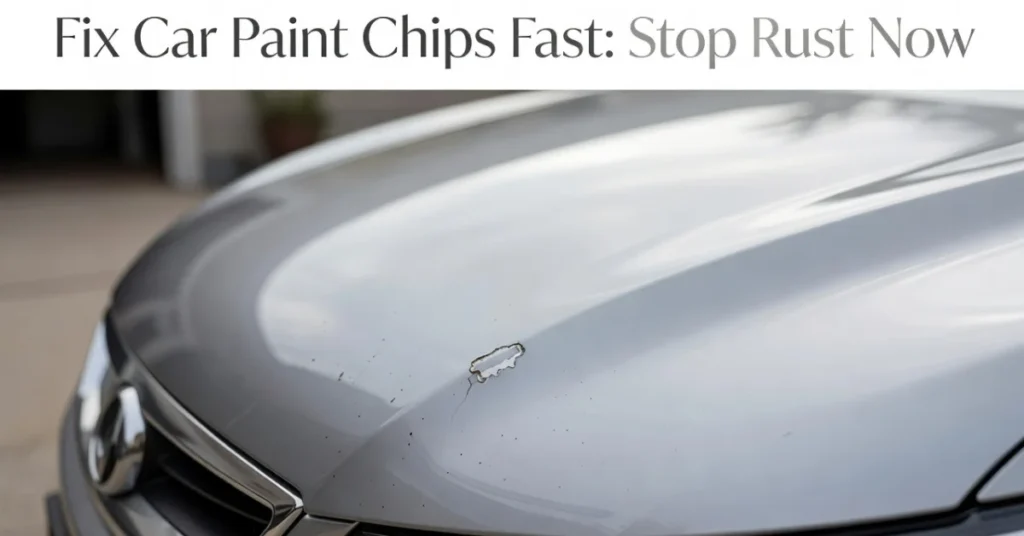
That gravel ping on the highway feels harmless. Then you walk out to your hood a week later and there it is: a tiny grey dot where your paint used to be. Learning how to fix car paint chips early is the difference between a ten-dollar fix and a full panel repaint down the road.
Here’s the thing nobody tells you at the dealership. Most chips don’t need a professional. With the right prep, a matched touch-up paint, and some patience, you can handle this in your driveway on a Saturday afternoon.
Why Your Car Keeps Picking Up These Marks
Every car on the road takes hits from loose stones, road salt residue, and debris kicked up by trucks. Highway driving is the worst offender, since speed turns a small pebble into a hard hit.
One nationwide safety study tracking crash and road-hazard data found road debris factors into tens of thousands of incidents across the country every year. Most of those encounters never make the news. They just leave a mark on your hood, mirror caps, or front bumper.
Your car’s paint isn’t one solid layer either. It’s built from a primer coat, a base color coat, and a clear top coat that seals everything against moisture. Once a chip cuts through all three, bare metal gets exposed. And bare metal plus rain is basically a rust invitation.
Chip Severity vs. Recommended Fix
Not every chip calls for the same approach. Use this table as a quick first check before you buy anything.
| Chip Type | What You’ll See | Recommended Fix |
|---|---|---|
| Small surface chip | Clear coat scratched, base color still intact | Touch-up pen, no primer needed |
| Medium chip | Base color gone, metal not yet visible | Touch-up bottle and brush, two thin coats |
| Deep chip to metal | Shiny or grey metal visible at the bottom | Light sanding, primer, then paint |
| Chip with rust | Orange or brown discoloration inside the chip | Rust converter first, then the standard repair |
| Cluster of chips on one panel | Multiple chips, clear coat looks dull overall | Full panel respray from a body shop |
Match your chip to a row here before moving on. It saves a trip back to the auto parts store for something you didn’t need, and it sets up the rest of this how to fix car paint chips guide with the right expectations.
Tools You Actually Need Before You Start
Skip the store aisle guesswork. Here’s what a proper repair calls for:
- Color-matched touch-up paint (check your door jamb sticker or glovebox for the code)
- Automotive primer, only needed if the chip reaches bare metal
- Fine-grit sandpaper, around 1500 to 2000 grit
- Isopropyl alcohol or a wax-and-grease remover
- Microfiber cloths
- A toothpick, micro-brush, or fine artist’s brush
- Clear coat or a sealant product
- Polishing compound for the final blend
You likely have half of this in a garage drawer already. The paint and clear coat are the only items most people need to actually buy.
Touch-Up Paint Formats: Which One Fits Your Chip
Auto parts stores sell three main formats, and picking the wrong one is a common early mistake.
| Format | Best For | Trade-Off |
|---|---|---|
| Paint pen | One or two small chips under half an inch | Less precise on deeper chips, can look thick |
| Brush-cap bottle | Single chips needing a controlled, thin layer | Slower to apply, needs a steady hand |
| Pipette or squeegee kit | Panels with many small chips clustered together | Higher cost, more setup and drying time |
A paint pen works fine for a lone chip on a door edge. A hood covered in a dozen small pepper-style chips is where a full kit earns its price.
How to Fix Car Paint Chips in Five Simple Stages
This is the core process, and it applies to nearly every small chip you’ll encounter on doors, hoods, mirrors, or bumpers. Aim for a dry day with the temperature between 50 and 85 degrees Fahrenheit. Paint applied outside that range can dry unevenly or take far longer to cure.
Step one: clean the area completely. Wash the panel with soap and water first. Then wipe the chip and the surrounding inch of paint with isopropyl alcohol. Dirt or wax residue left behind will stop new paint from bonding properly.
Step two: check and prep the damage. If you can see shiny metal or a hint of rust at the bottom of the chip, lightly sand that spot. This gives primer something to grip. Wipe away the dust before moving forward.
Step three: prime if needed. Bare metal chips need a thin primer layer first. Let it dry for around thirty minutes, or follow the can’s instructions exactly.
Step four: test the color, then apply thin layers. Before touching the car, dab a small amount of paint onto a piece of white paper. This confirms the color match and gives you a feel for how much paint your brush is holding. Once you’re confident, load a small amount and dab it into the chip, building up slightly above the surrounding surface. Don’t flood it in one go. Two or three thin coats beat one thick, uneven blob every time. Let each layer dry for twenty to thirty minutes before adding the next.
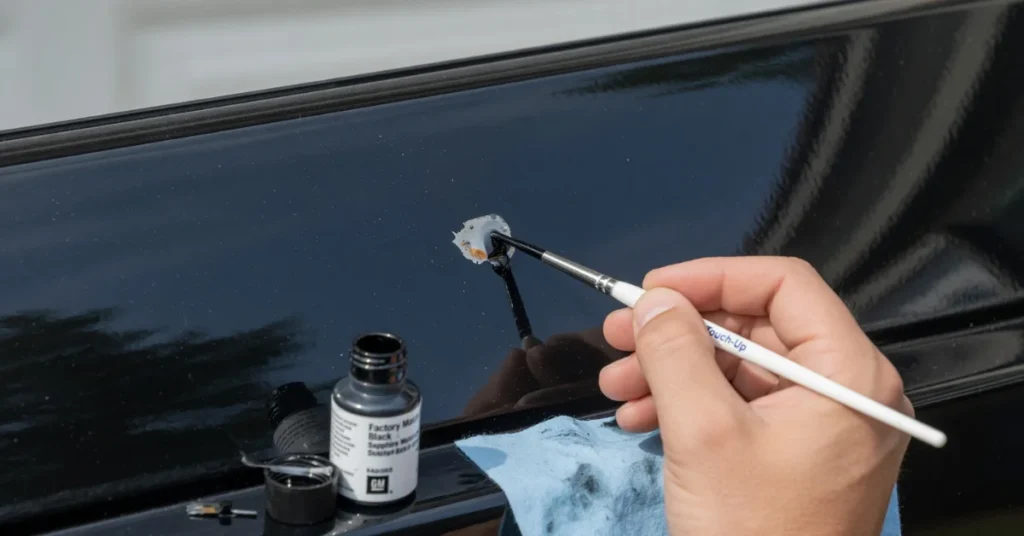
Step five: seal and blend. Once the color has fully cured, usually a day or two, apply a clear coat over the top. After it hardens, use a light polishing compound to level the repair flush with the original paint. Hold off on any rubbing compound or heavy polish for a full 30 days. Working the repair too early can soften the new paint layers and cause hazing or lifting.
Anyone who has run this process a few times knows the temptation to rush step four. Resist it. Thin coats are what separate an invisible repair from a noticeable bump.
Mistakes That Ruin an Otherwise Good Repair
A rushed job usually fails for one of these reasons.
Painting in direct sunlight or on a hot panel causes the paint to dry unevenly and can trap air bubbles. Cooler, shaded conditions work far better.
Skipping the cleaning step is another common slip. Wax and road grime under new paint will eventually cause it to lift or peel.
Some people also try nail polish or generic craft paint as a shortcut. It won’t hold up. These products lack the UV resistance and flexibility of automotive-grade paint, and they tend to yellow within weeks.
Finally, touching the repair before it’s fully cured smudges the finish. Give it the full recommended drying window, even if that means leaving tape marks on the driveway overnight.
How to Fix Car Paint Chips on Larger or Deeper Damage
Not every chip fits the standard five-step process. If a chip is wider than roughly a quarter inch, the standard touch-up approach only buys time. The same goes for chips where rust has already started spreading beneath the paint.
In these cases, the repair needs more sanding to remove all corrosion, a rust converter product, and possibly a spot-blend with a professional-grade spray gun. This is where knowing how to fix car paint chips at the beginner level and knowing when to stop overlap.
A cluster of chips on one panel, especially a hood or bumper, often signals the clear coat is thinning across the whole area. In that case, a single-panel respray from a body shop usually beats repeated spot touch-ups.
There’s also a scenario DIY guides tend to skip: a rock strike hard enough to chip the paint sometimes leaves a small dent too. If you can feel a dip under the chip, get the dent addressed first, ideally with paintless dent repair, before you touch up the paint. Painting over a dent just means redoing the work once the panel gets pulled back to normal.
What the Research Shows
Early findings from road-safety researchers point to a clear pattern: debris exposure rises sharply with highway speed and following distance. Interstate driving accounts for a disproportionate share of debris-related vehicle damage compared with local streets.
Detailers and body shop technicians who see this damage daily report the same trend season after season. Chips cluster on leading edges: hoods, front bumpers, side mirrors, and the lower third of doors. That pattern lines up with where airflow and road spray hit hardest.
The takeaway for anyone learning how to fix car paint chips is simple. Check those specific zones first during any inspection, since that’s where new damage shows up fastest.
Who Should Attempt This and Who Shouldn’t
DIY touch-up work suits most drivers dealing with small, scattered chips on a budget. It’s inexpensive, doesn’t require special equipment, and can be done over a weekend.
Skip the DIY route if your car has a specialty finish like pearl, matte, or a tri-coat metallic. These are notoriously hard to color-match by hand, and a bad attempt often looks worse than the original chip. Leasing a vehicle also changes the math, since return inspections tend to flag visible touch-up work.
For drivers who’d rather skip learning how to fix car paint chips by hand, mobile detailing and touch-up services have become a middle option in many cities. A technician comes to your driveway with color-matching tools and handles the blending for a fraction of a body shop quote. It’s worth a quick search in your area if the idea of freehand painting makes you nervous.
A Few Notes for Different Vehicles
Not every car behaves the same way once paint gets damaged. Newer vehicles with factory ceramic coatings sometimes need a light abrasion pass before touch-up paint will stick at all, since the coating repels most liquids by design.
Aluminum panels, common on some truck hoods and doors, corrode differently than steel. They form a white, powdery oxidation instead of orange rust, so don’t wait for the classic rust color as your warning sign.
Older vehicles with single-stage paint, meaning no separate clear coat, are actually simpler to touch up. There’s one less layer to match and blend, though the overall shade may have faded compared to a fresh bottle of factory-matched paint.
Preventing the Next Round of Chips
A little prevention goes a long way toward protecting the work you just did.
Keep more distance behind trucks and vehicles hauling loose cargo. Wash your car regularly to clear off road salt and grit before it sits against the clear coat. A paint protection film on the front bumper and hood is worth the cost if most of your miles happen on the highway. Applying a fresh wax or sealant layer every few months adds another buffer against future impacts.
Wrapping It Up
Small paint chips aren’t a cosmetic afterthought. Left alone, they turn into rust spots that creep under the surface long before you notice them from a distance. Now that you know how to fix car paint chips with basic tools and a little patience, there’s no reason to let that first ping sit untouched through another winter.
This article is for general informational purposes. Results vary based on paint type, climate, and the extent of existing damage. For deep chips, rust, or specialty finishes, consult a professional auto body technician.
FAQs
How long does touch-up paint take to fully cure?
Most touch-up paints are dry to the touch within an hour but need several days, sometimes up to two weeks, to cure completely before polishing or waxing over them.
Can I use nail polish to fix a small chip in an emergency?
It’s not recommended. Nail polish lacks UV protection and flexibility, and it can yellow or crack within weeks of exposure.
Will insurance cover paint chip repair?
Rarely, unless the chip is part of a larger covered claim like hail or vandalism. Filing a claim for a small chip usually isn’t worth the potential premium increase.
How do I find my car’s exact paint color code?
Check the sticker inside the driver’s door jamb, the glovebox, or under the hood. Most manufacturers list both the exterior and interior color codes there.
Is it better to repair a chip myself or take it to a shop?
Small, scattered chips on standard paint are fine for DIY. Deep chips, rust, clustered damage, or specialty finishes are usually worth professional attention.