
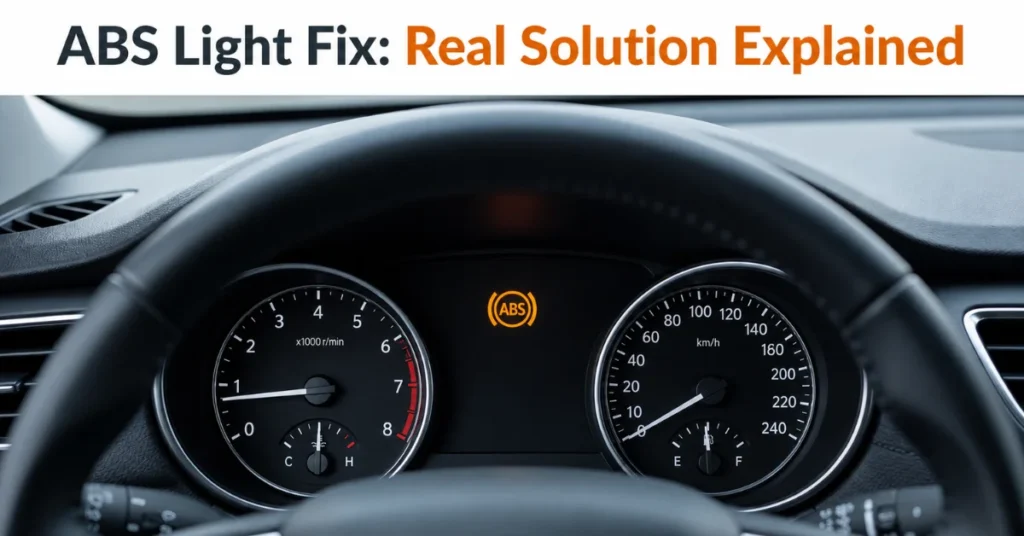
That little amber “ABS” symbol just lit up on your dashboard, and now you’re wondering if it’s safe to drive at all. Here’s the short version: figuring out how to fix ABS light on car problems usually comes down to a handful of common culprits, most of which you can spot before ever stepping into a repair shop.
The good news? This isn’t the check engine light’s scarier cousin. Your regular brakes still work fine in almost every case. What’s failing is the extra layer of protection that keeps your wheels from locking up during a hard stop.
What Your ABS Light Actually Means
The anti-lock braking system uses a set of speed sensors at each wheel to watch for sudden slowdowns that suggest a wheel is about to lock. When the control module spots trouble in that data, it flips on the warning light and, in many cars, quietly shuts off ABS assistance until the fault clears.
That’s a fair trade-off. A system that can’t trust its own sensors shouldn’t be making split-second braking decisions for you.
Anti-lock brakes became mandatory on new passenger vehicles sold in the United States as part of federal vehicle safety standards, and the malfunction light is built into that same rulebook. It exists because regulators wanted drivers to know, immediately, when this safety layer stops working correctly.
Here’s something most guides skip: on most modern vehicles, the traction control and electronic stability control systems pull data from those exact same wheel speed sensors. That’s why a single failed sensor often lights up three warnings at once, ABS, traction control, and stability control, instead of just one. It looks alarming, but it usually points back to a single shared part rather than three separate failures.
How to Fix ABS Light on Car Problems: Where to Start
Before grabbing tools, do a quick visual check. Pop the hood and look at the brake fluid reservoir first — low fluid is one of the fastest ways to trip this light, and it’s the easiest thing to rule out.
Top the fluid to the “full” line with the type your manual calls for. If it’s noticeably low, don’t just refill and forget it. A dropping level usually means worn brake pads or a slow leak somewhere in the lines, and that part needs a look too.
Next, check the fuse box. A blown ABS fuse cuts power to the whole system instantly, and swapping it is a five-minute job with the right amperage replacement. If a fresh fuse blows again right away, stop there. That’s a short in the wiring, and it needs a mechanic with a multimeter, not another fuse.
Sometimes the fix is almost embarrassingly simple: turn the ignition off, wait ten seconds, and restart. This clears temporary glitches the module picked up from a bad connection or a momentary sensor hiccup. If the light comes back within a mile or two of driving, the problem is real and mechanical, not electrical noise.
The Five Most Common Causes Behind the Warning
Once the basics are ruled out, the list of usual suspects gets pretty predictable.
- Dirty or damaged wheel speed sensors. Road grime, brake dust, and rust build-up on the sensor ring can confuse the reading. Cleaning it sometimes solves the problem outright.
- A damaged tone ring, not the sensor itself. This one gets skipped a lot. The sensor reads a toothed ring mounted on the wheel hub or axle, called the tone ring or reluctor ring. If that ring is chipped, rusted, or coated in metal debris from a worn bearing, the sensor can be perfectly fine and still send bad data. Replacing the sensor alone won’t fix this.
- Failing wheel speed sensor wiring. Corroded connectors or chewed-through wiring near the wheel well breaks the signal path entirely.
- A weak or failing ABS pump motor. This is the component that actually pulses brake pressure. A soft, spongy, or unusually hard pedal alongside the light is a strong hint here.
- Corroded or faulty control module connections, or worn brake components. Dirt and moisture between the module and the wiring harness interfere with communication even when every individual part is fine, and worn pads or warped rotors can throw off the same vibration and speed readings the sensors depend on.
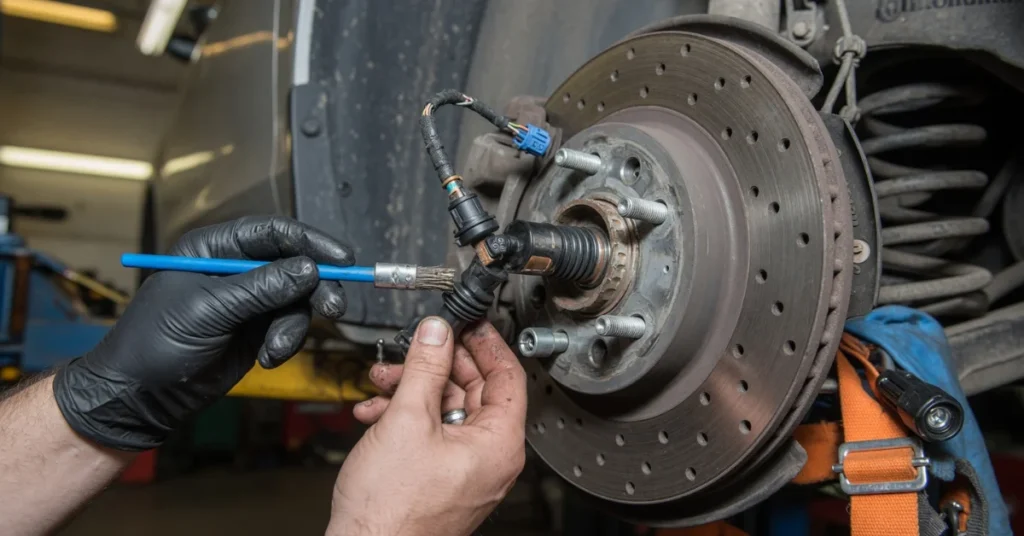
Anyone who has run diagnostics on a modern brake system knows the pattern: sensors, wiring, and tone rings cause the majority of ABS faults, while the pump and module account for the pricier, less frequent repairs.
Quick Diagnostic Table: Symptom Plus ABS Light
| What Else You Notice | Likely Cause |
|---|---|
| Traction control or stability light on too | Shared wheel speed sensor fault |
| Soft, spongy, or unusually hard brake pedal | Failing ABS pump motor |
| ABS light AND brake warning light together | Low brake fluid or hydraulic fault |
| Light appears mainly in wet or cold weather | Corroded sensor connector |
| Grinding or humming noise from a wheel | Worn bearing damaging the tone ring |
What the Research Shows
Federal crash research going back decades has consistently linked anti-lock brakes to better steering control during emergency stops, particularly on wet or loose surfaces. That’s the entire point of the system, and it’s why regulators built a dedicated warning light into the standard rather than leaving drivers to guess.
Repair data from independent shops through 2025 and into 2026 tells a fairly consistent story too. Wheel speed sensor faults, damaged tone rings, and wiring damage make up the bulk of ABS warning light calls, while full module replacements remain the least common outcome. Technicians who see these repairs weekly will tell you the same thing: most ABS lights trace back to something you can inspect with your own eyes before ever touching a scan tool.
How to Fix ABS Light on Car Issues for Good
A quick reset only masks the symptom. To actually close the book on the problem, you need the fault code, not just the light.
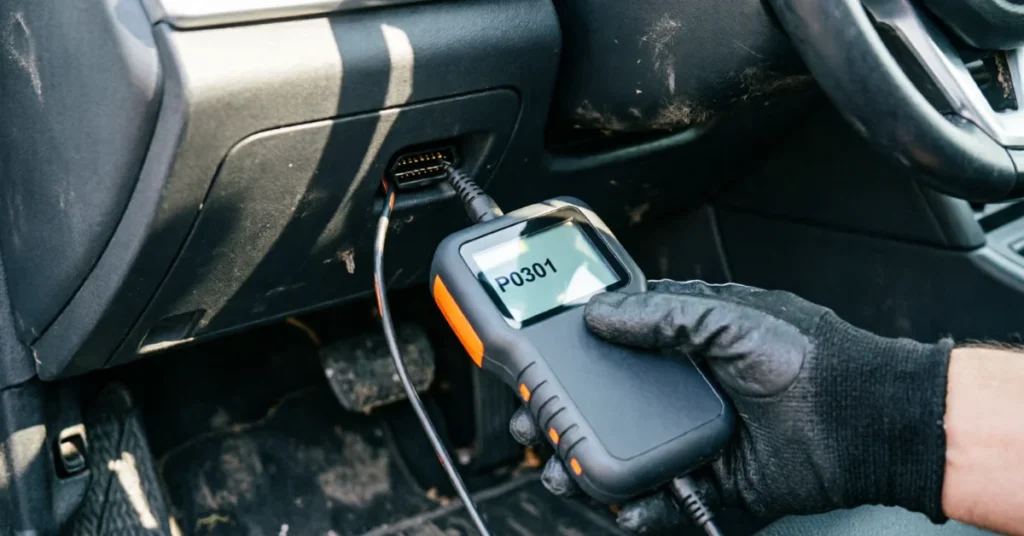
An OBD-II scanner, or a basic ABS-capable code reader since not every generic scanner reads ABS codes, pulls the exact stored fault. Say, a wheel speed sensor circuit fault at the front left, versus a module communication error. That single piece of information turns guesswork into a direct repair.
Once the actual part is replaced or the wiring is repaired, most vehicles won’t clear the light automatically. You’ll typically need to drive at a steady speed above 15 to 20 mph for several minutes so the module can confirm consistent readings from all four wheels, or clear the stored code manually with a bi-directional scan tool. Skipping this step is why so many drivers swear they “fixed it” only to see the light return the next morning.
When to Stop DIY and Call a Mechanic
Fluid top-offs and fuse swaps are fair game for a driveway repair. Module diagnostics, pump replacement, and wiring repairs buried inside the wheel well generally aren’t, unless you’re comfortable with a multimeter and a repair manual open on your lap.
A shop with a bi-directional scan tool can talk directly to the ABS module, trigger individual components, and confirm exactly which sensor or valve is misbehaving. That’s the difference between replacing one $60 sensor and throwing parts at the car until something sticks.
DIY vs. Mechanic: A Realistic Breakdown
| Repair | Who Should Do It | Typical Difficulty |
|---|---|---|
| Topping up brake fluid | DIY | Low |
| Replacing a blown ABS fuse | DIY | Low |
| Cleaning a wheel speed sensor | DIY, with basic tools | Medium |
| Replacing a wheel speed sensor | DIY or mechanic | Medium |
| Tone ring or wheel bearing replacement | Mechanic | High |
| Wiring repair inside the wheel well | Mechanic | High |
| ABS pump motor or module replacement | Mechanic | High |
If the ABS light comes on alongside the regular brake warning light, treat that combination as urgent. It often signals a shared hydraulic problem rather than an isolated ABS fault, and braking performance itself could be reduced.
Different Drivers, Different Fixes
Not every car handles this the same way, and neither does every driver’s situation.
Older vehicles, especially those built before the mid-2000s, often store ABS codes in a format that basic consumer-grade scanners can’t read at all. If your budget code reader shows nothing despite the light being on, that’s a sign you need a dealer-level or ABS-specific tool, not proof the system is fine.
Drivers in colder climates deal with this more often than most. Road salt accelerates corrosion on wheel speed sensor connectors, so if you’re in a snowy region and the light shows up every winter, a dielectric grease application on those connectors during your seasonal tire swap can head off a repeat visit.
Newer vehicles with electronic stability control add one more wrinkle worth knowing: a misaligned or failing steering angle sensor can occasionally trigger an ABS or stability warning even when every wheel sensor is healthy. It’s a less common cause, but it’s worth mentioning to a technician if you’ve recently had wheel alignment or steering work done.
Fleet or lease vehicle drivers should check the warranty status before doing anything else. ABS module and sensor failures are frequently covered, and a DIY attempt can complicate a claim that would’ve otherwise been free.
Wrapping It Up
Working out how to fix ABS light on car problems isn’t usually a mystery once you follow the trail: fluid, fuse, sensors and tone rings, then the pricier components if nothing else checks out. Most repairs start and end with a $15 sensor or a $5 fuse, not a full module swap.
Don’t ignore the light just because your regular brakes still feel normal. The whole reason it’s there is to flag a safety system quietly working at reduced capacity, or not at all.
This article is for informational purposes only. For diagnosis and repair specific to your vehicle, consult a qualified automotive technician.
FAQs
Is it safe to drive with the ABS light on?
Your regular brakes typically still function, so short trips at low speed aren’t usually dangerous. Anti-lock protection won’t kick in during a hard stop, though, so a proper inspection soon is a smart call, especially before longer drives or bad weather.
Can a car battery disconnect fix the ABS light?
Sometimes it clears a false trigger caused by a momentary glitch. It rarely fixes an actual sensor, wiring, or module fault, and the light usually returns within a short drive if the underlying problem is real.
Why does my ABS light come on only when it’s raining?
Wet conditions can expose intermittent wiring faults or a failing sensor connector that only misbehaves once moisture gets in. It’s worth having the connectors checked even if the light disappears once things dry out.
How much does it typically cost to fix an ABS light?
A wheel speed sensor replacement is generally the least expensive repair, while a full ABS module replacement sits at the higher end. Cost varies a lot by vehicle make, model, and local labor rates, so a diagnostic scan first avoids paying for guesswork.
Will the ABS light affect my car’s inspection or emissions test?
In many regions, yes. Some state safety inspections specifically check for active dashboard warning lights tied to braking systems, so an unresolved ABS light can mean a failed inspection depending on local rules.