
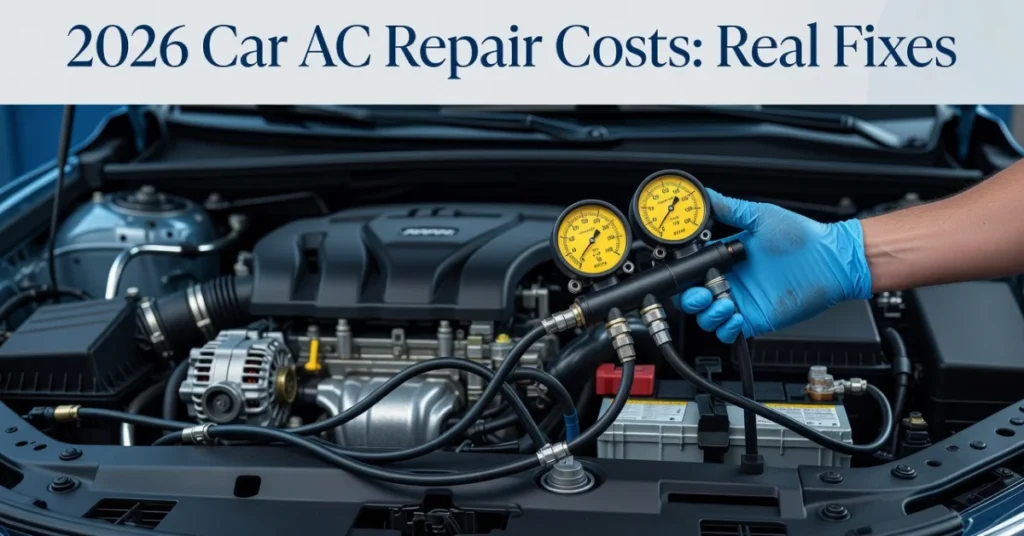
You’re sitting at a red light, vents blasting, and nothing but warm air comes out. That’s usually the moment drivers start typing the same question into their phone: how much to fix AC in car repairs, exactly, before a shop even looks at it?
There isn’t one number. A cabin air filter swap might run you forty dollars. A failed compressor can run past two thousand. What you pay depends entirely on which part of the system gave out, what refrigerant your car uses, and who’s doing the work. This guide breaks down real 2026 pricing by repair type, so you walk into a shop already knowing whether a quote is fair.
Quick Answer: What Most Repairs Actually Cost
Most car owners land somewhere between $150 and $1,500. Minor jobs — a recharge, a filter, a small seal — sit at the bottom. Component replacements like a compressor or evaporator sit at the top. how much to fix AC in car repairs cost
| Repair Type | Typical Cost (2026) | Notes |
|---|---|---|
| Refrigerant recharge (no leak) | $150–$350 | Cheaper on R-134a, pricier on R-1234yf |
| Recharge with leak detection dye | $200–$500 | Adds diagnostic time |
| Leak repair (hose, O-ring, seal) | $100–$800 | Wide range depending on location of leak |
| Condenser replacement | $300–$900 | Usually mounted in front of radiator |
| Evaporator replacement | $700–$1,300 | Buried in dash, labor-heavy |
| Expansion valve / orifice tube | $200–$450 | Often replaced alongside compressor |
| Blower motor | $300–$600 | Affects airflow, not temperature |
| Compressor replacement (new) | $900–$2,000 | Most expensive common repair |
| Compressor replacement (remanufactured) | $500–$1,300 | 30–50% cheaper than new |
Luxury and European models often run 30–50% higher than mainstream brands, mostly because parts are pricier and the engine bay is tighter to work in.
Why the Price Range Is So Wide
Understanding how much to fix AC in car systems starts with knowing it isn’t one single part. It’s a sealed loop of compressor, condenser, evaporator, expansion valve, and lines, all working together to move refrigerant and pull heat out of the cabin. When one piece fails, the rest of the system usually keeps running fine — which is good news, because full system replacements are rare.
What drives your final number:
Which part failed. A leaking O-ring is a fifteen-minute fix. A compressor that’s seized and thrown metal shavings into the lines can turn into a full system flush, and that changes the bill fast.
Your vehicle’s refrigerant type. Cars built before roughly 2017 mostly use R-134a. Newer vehicles use R-1234yf, a refrigerant with a smaller environmental footprint but a much higher per-pound cost.
| Refrigerant | Common In | Cost per Pound | Typical Recharge Cost |
|---|---|---|---|
| R-134a | Vehicles before ~2017 | $3–$6 | $150–$350 |
| R-1234yf | 2017 and newer, most 2026 models | $40–$80 | $200–$500 |
That price gap alone explains why two nearly identical recharge jobs can cost twice as much depending on the model year.
Labor access. Some evaporators sit buried behind the dashboard, which means a tech has to partially disassemble the interior just to reach the part. That labor time gets billed, and it adds up.
Dealer vs. independent shop. Dealerships routinely charge 25–50% more than independent specialists for the same recharge job, mostly due to overhead and diagnostic fees.
Time of year. AC failures spike the moment temperatures do. Shops in hot regions often see backed-up schedules through peak summer months, and a rushed same-day slot can carry a premium over booking the same job in spring or fall.
How Much to Fix AC in Car Systems by Common Symptom
Matching your symptom to a likely repair helps you gauge cost before you even book an appointment.
Warm air, no cold air at all usually points to a refrigerant leak or a dead compressor. If the compressor clutch won’t engage, expect a bigger bill — that’s the most expensive common repair in the whole system.
Weak airflow is often a clogged cabin filter or a failing blower motor. This is one of the cheaper fixes, frequently under $300.
Musty smell or moisture on the floor points to the evaporator, which is also one of the pricier and more labor-intensive jobs since it sits deep in the dash.
AC works, then cuts out intermittently can mean a failing pressure switch, a wiring issue, or a slow leak that only causes trouble once refrigerant drops below a threshold.
Loud clicking or grinding when AC turns on is almost always the compressor, and it’s worth having it checked before it fails completely and contaminates the rest of the system.
New vs. Remanufactured Compressor: The Choice Nobody Explains
If your compressor has failed, the shop will usually ask whether you want a new unit or a remanufactured one, and most drivers have never been walked through what that actually means.
A new compressor is built with all-new internal components and typically carries a one to three year warranty. A remanufactured compressor is a used unit that’s been disassembled, cleaned, rebuilt with new seals, and tested to original spec. It costs 30 to 50 percent less than new, but the warranty is usually shorter, often six months to a year depending on the rebuilder.
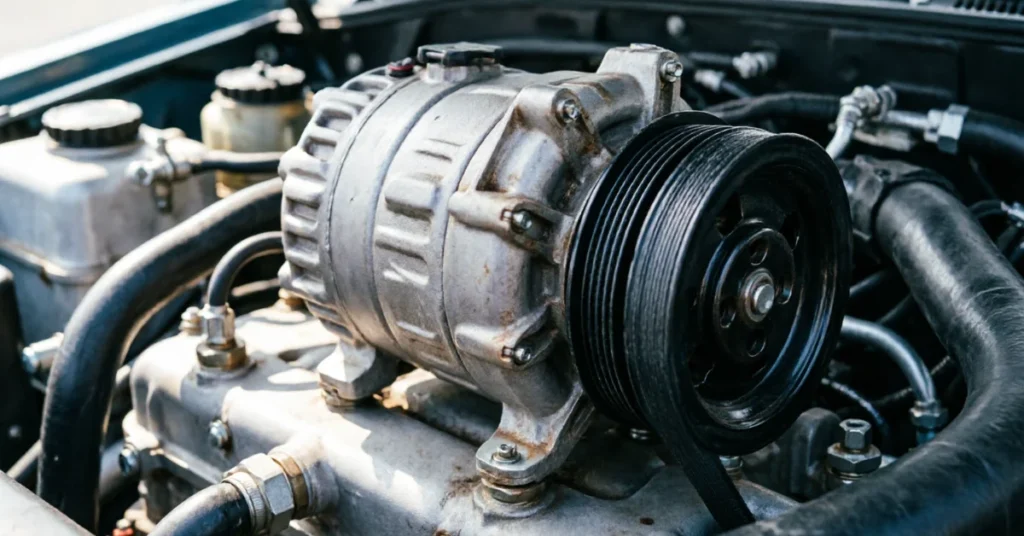
Labor cost is the same either way, since the installation process doesn’t change. For a car more than five years old that you don’t plan to keep long-term, a reputable remanufactured unit is usually the practical call. For a newer vehicle you intend to drive for another decade, paying more for new internals and a longer warranty tends to pay off.
One thing worth flagging: cheap, no-name remanufactured units bought online without a warranty are a common source of repeat failures. If you go remanufactured, buy from a rebuilder that stands behind the part in writing.
The Legal Side Nobody Mentions
Here’s something most pricing guides skip entirely, and it directly affects your bill. In the United States, any technician who services a car’s AC system for payment is legally required to hold an EPA Section 609 certification under the Clean Air Act. Servicing a system without it can carry fines up to $25,000 per day for the shop.
This certification requirement is also why auto parts stores can only sell small, self-sealing recharge cans under two pounds to the general public. Anything larger, or any refrigerant recovery and recycling equipment, legally requires certification to purchase. That two-pound limit isn’t a marketing choice — it’s federal regulation.
It matters for you as a customer because it explains part of what you’re paying for. A licensed shop’s price isn’t just labor and parts; it includes the equipment, training, and legal compliance built into every recharge or recovery job.
What the Research Shows
A nationwide survey of independent repair shops found that standard AC service — inspection plus recharge — averaged between $430 and $521 across a range of common vehicles, with labor making up most of that figure. Separate industry pricing data places the broader national average closer to $384 to $445 when minor and major repairs are blended together.
Anyone who has run diagnostics on a modern AC system knows the pattern: low refrigerant almost never means the system simply “used it up.” These are sealed loops, so a low charge nearly always means something is leaking somewhere, even if it’s too small to notice yet. That’s part of why shops recommend fixing the leak rather than just topping off the refrigerant every season — a repeat recharge without finding the leak just delays the real fix and adds cost over time.
Compressor lifespan data backs this up too. Most compressors last 8 to 15 years or somewhere in the 100,000 to 200,000-mile range, and premature failure is most commonly linked to driving on a low charge for extended periods.
DIY Recharge Kits: Worth the Risk?
Auto parts stores sell canister recharge kits for $40 to $60, and they’re tempting when a shop quote feels steep. They can work for a very minor, slow leak. But there’s a catch that doesn’t get mentioned on the box: overcharging the system, using the wrong refrigerant type, or missing a leak entirely can damage the compressor, and that turns a $50 fix into a $1,000 one.
Anyone who has worked in a shop bay has seen this exact scenario play out — a DIY recharge masks a leak for a few weeks, then the compressor fails outright because it ran dry between top-offs. If your car needs refrigerant more than once every year or two, skip the can and get the leak found professionally.
Getting a Fair Quote
Before you find out how much to fix AC in car repairs will actually cost, a few habits keep you from overpaying. A few habits keep you from overpaying:
- Ask for a diagnostic before agreeing to any recharge — a shop that recharges without checking for leaks first is guessing.
- Get the refrigerant type confirmed (R-134a vs. R-1234yf) before comparing quotes, since the price-per-pound difference alone can swing an estimate by hundreds of dollars.
- Request the failed part by name, not just “AC repair,” so you can price-check it against the ranges above.
- Compare one independent shop quote against one dealer quote — the gap is often bigger than people expect.
- Ask whether a leak dye test is included, since finding the actual leak location prevents repeat visits.
- If a compressor is involved, ask new vs. remanufactured up front and get the warranty terms in writing either way.
- Book outside peak summer weeks when possible — a spring appointment can avoid the same-day rush premium.
Is It Worth Fixing?
For most daily drivers, yes. A non-functional AC system can knock real money off a car’s resale value, particularly in warmer climates where buyers won’t consider a car without working air. If the estimate is creeping toward the value of the car itself, though, that’s the point to weigh repair against trade-in, especially on an older vehicle already showing other wear.

Conclusion
So, how much to fix AC in car repairs in 2026? For most people, the honest range is $150 on the low end for a simple recharge up to roughly $1,500 to $2,000 for a full new compressor replacement, with the average shop visit landing closer to $400–$500. The exact number always comes down to which part failed, whether your car takes the cheaper or pricier refrigerant, and whether you go new or remanufactured on a compressor. Get the leak diagnosed before you pay for a recharge, and you’ll avoid paying twice.
This article is for general informational purposes. Get an in-person diagnostic from a licensed mechanic before authorizing any repair.
FAQs
How much to fix AC in car repairs — is it cheap or expensive overall?
It depends entirely on the part. A recharge or filter swap is cheap, usually under $350. A compressor or evaporator replacement is expensive, often $700 and up.
Can I just add refrigerant myself?
You can for a very minor, slow leak, but overcharging or using the wrong refrigerant can damage the compressor. Auto parts stores are also legally limited to selling small, under-two-pound cans to non-certified buyers. If your AC needs refrigerant more than once a year, get the leak found professionally instead.
Why is my AC repair quote so much higher than a friend’s?
Different refrigerant types, different vehicles, and different failed parts all produce very different bills. Newer cars using R-1234yf cost noticeably more to recharge than older R-134a vehicles.
Should I choose a new or remanufactured compressor?
New costs more but comes with a longer warranty, typically one to three years. Remanufactured saves 30 to 50 percent but usually carries a shorter warranty. Older vehicles you don’t plan to keep long-term are a better fit for remanufactured.
How do I know if it’s the compressor?
Loud clicking or grinding when the AC engages, along with a clutch that won’t stay engaged, usually points to the compressor. A shop can confirm with a pressure test.
Does car insurance cover AC repair?
Standard wear-and-tear AC failures are not covered by typical auto insurance. Comprehensive coverage may apply only if the damage came from an accident, storm, or vandalism.


