
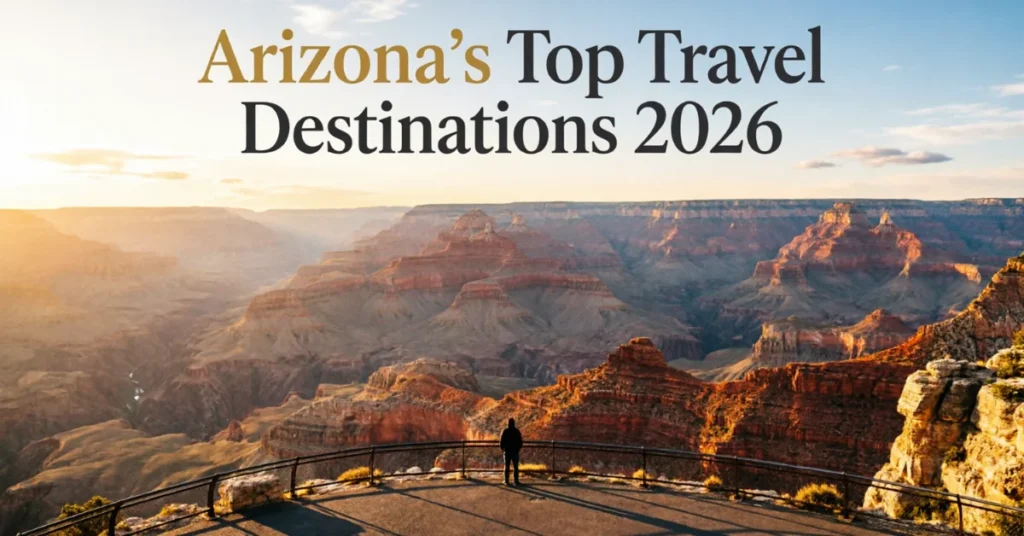
Stand at the edge of the South Rim at sunrise and you’ll understand why so many people plan an entire trip around one view. Arizona travel destinations pull in tens of millions of visitors every year, and it’s not hard to see why once you’ve watched the canyon walls change color in real time. This state does not rely on one landmark to carry its reputation, either. Between red rock towns, desert preserves, mountain forests, and a handful of cities that mix Southwestern history with modern food scenes, there’s a version of Arizona for almost every kind of traveler.
This piece skips the obvious “top 10 list” format. Instead, it breaks down what actually makes these places worth your time, what to expect on the ground, what changed for 2026 travelers specifically, and where the crowds thin out if you’re willing to drive an extra hour.
Why Arizona Travel Destinations Keep Pulling in Millions
Arizona’s tourism economy isn’t a small side industry. State tourism figures show over 45 million people visited Arizona in a recent year, spending close to $29 billion inside its borders. That kind of volume doesn’t happen by accident, it’s the result of geography that swings from saguaro desert to pine forest within a two-hour drive.
Grand Canyon National Park alone draws close to five million visitors a year, making it one of the most-visited national parks in the country. But the Canyon isn’t the whole story. Sedona’s red rock formations, Tucson’s desert museums, and Flagstaff’s mountain air all pull their own steady stream of travelers who never set foot near the South Rim.
What’s interesting is how spread out the appeal actually is. Business travelers head to Phoenix and Scottsdale for conferences and golf. Retirees settle into snowbird routines in the Valley during winter months. Younger travelers chase hiking trails, hot air balloon rides, and desert stargazing. Families gravitate toward theme parks, wildlife parks, and shorter, kid-friendly canyon overlooks. Few states manage to serve that many different travel styles at once.
The Grand Canyon Isn’t the Only Show in Town
Anyone who has driven north from Phoenix toward Flagstaff knows the landscape shifts fast, cactus gives way to juniper, and juniper gives way to ponderosa pine. That range is exactly why Arizona travel destinations work so well as a multi-stop itinerary rather than a single-city visit.
Sedona deserves its reputation. The red rock buttes glow deep orange at sunset, and hiking trails like Cathedral Rock and Devil’s Bridge fill up fast during spring and fall. Locals here will tell newcomers to hit the trailheads before 8 a.m. if they want parking and quiet at the same time.
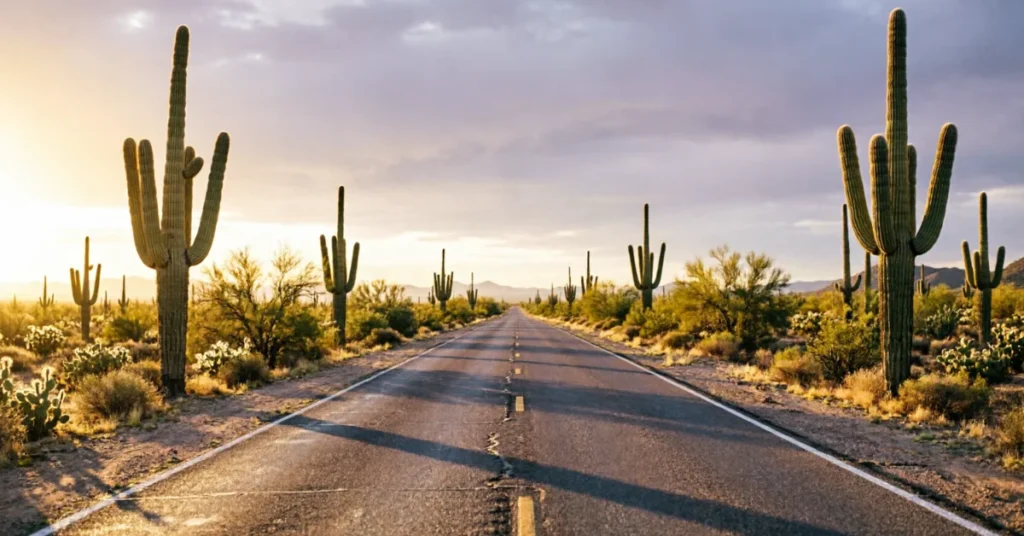
Tucson trades red rock for saguaro forest. Saguaro National Park splits into east and west districts, and both offer short driving loops for people who want desert scenery without a full-day hike. The city’s food scene, especially its Mexican-influenced dishes, has earned it recognition as a UNESCO City of Gastronomy.
Flagstaff sits at over 6,900 feet, which means snow in winter and cool evenings in summer, a genuine break from the desert heat everyone associates with the state. It’s also one of the best spots in the country for stargazing, thanks to strict local lighting ordinances that keep the night sky dark.
Scottsdale and Phoenix round things out with resort culture, spa retreats, and a golf scene that draws visitors year-round. This pairing works well for travelers who want daytime hiking and a proper hotel bed at night, rather than a full camping trip.
Page and Antelope Canyon, near the Utah border, belong on this list too, though they run on different rules entirely. More on that below, since it trips up more first-time visitors than any other stop on this list.
Bisbee, a former copper mining town near the Mexican border, has quietly become a favorite for travelers chasing something less polished, steep streets, old mining tunnels you can tour, and a strong arts community that took root after the mines closed.
Quick Comparison: Arizona Regions at a Glance
| Region | Best Season to Visit | Drive Time from Phoenix | Best For |
|---|---|---|---|
| Grand Canyon (South Rim) | March–May, Sept–Oct | ~3.5 hours | First-timers, iconic views, family-friendly rim trails |
| Sedona | Spring and fall | ~2 hours | Hiking, red rock scenery, photography |
| Flagstaff | Summer, winter (snow) | ~2.25 hours | Cooler weather, stargazing, mountain forest |
| Tucson | Fall through spring | ~1.75 hours | Desert museums, food culture, saguaro forest |
| Page / Antelope Canyon | Spring and fall | ~4.5 hours | Slot canyons, Lake Powell, guided cultural tours |
| Scottsdale / Phoenix | Winter through early spring | Home base | Resorts, golf, spa breaks |
| Bisbee | Fall through spring | ~3.5 hours | Off-the-beaten-path history, arts community |
What Changed for 2026 Travelers
A few practical details shifted heading into 2026, and they’re worth flagging since older guides won’t have them.
Grand Canyon National Park still charges its standard $35 per-vehicle entrance fee, valid for seven consecutive days, and the $80 America the Beautiful annual pass still covers entry to Grand Canyon plus thousands of other federal sites nationwide. What’s new for 2026 is a separate surcharge that applies specifically to non-US residents. Visitors age 16 and older who aren’t US citizens or residents now pay an additional $100 per person at the gate, unless they’re traveling on the $250 Non-Resident Annual Pass. For a family of international visitors stopping at more than one park, that annual pass often ends up cheaper than paying the surcharge at each stop.
The math matters for road-trippers, too. Anyone stacking Grand Canyon with Saguaro National Park or Petrified Forest National Park within a single year will usually come out ahead buying the $80 America the Beautiful pass upfront rather than paying separate entrance fees at every stop.
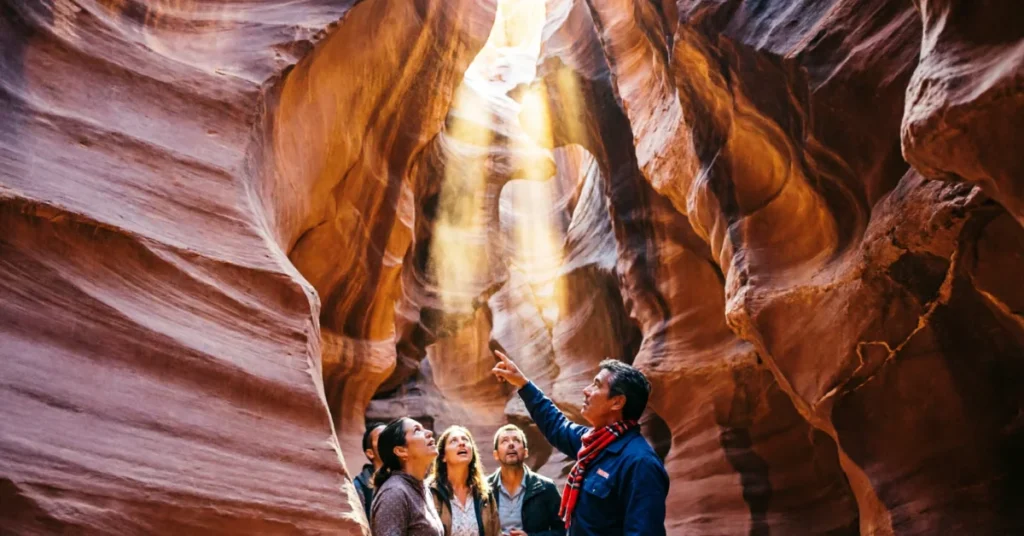
Antelope Canyon deserves its own callout, since it’s one of the most photographed spots in the state and also one of the most misunderstood. The canyon sits entirely on Navajo Nation land, not inside a national park, which means the America the Beautiful pass doesn’t apply here at all. Entry is only possible through an authorized Navajo guide, and there’s a separate Navajo Nation permit fee, typically around $15 per person per location per day, on top of whatever a tour operator charges. Flash flooding is a genuine risk inside slot canyons like this one, and the danger climbs sharply during the summer monsoon season, roughly July through September, though local guides note it can happen at other times of year as well.
What the Research Shows
Detailed analysis of state visitation patterns reveals a few consistent trends worth knowing before you book anything. Overnight visitor volume to Arizona has stayed above pre-pandemic levels for several consecutive quarters, according to recent state tracking data, with hotel bookings and air arrivals both showing steady year-over-year growth.
Grand Canyon visitation specifically climbed to nearly 4.92 million recreational visits in the most recent full year on record, up from 4.74 million the year before. That’s not a one-year spike, the park has been trending upward since pandemic-era travel restrictions lifted. Spring and fall remain the sweet spot for anyone trying to dodge both summer heat and summer crowds.
One pattern that doesn’t get discussed enough: a meaningful share of visitors now split their trip across two or three regions instead of parking themselves in one city. Someone might spend two nights in Sedona, then head south to Tucson, rather than treating Arizona as a single-destination trip. This shift matters for planning purposes, since it means rental car mileage and driving time deserve more attention than a lot of older travel guides suggest.
Pros and Cons Worth Knowing Before You Book
No destination is perfect, and honest planning means weighing both sides.
What works in Arizona’s favor:
- Diverse landscapes packed into a manageable driving radius
- A long tourist season, since desert regions stay mild through winter
- Strong infrastructure around major sites, visitor centers, marked trails, shuttle systems
- Genuine off-the-beaten-path options for travelers tired of crowds
- A single annual park pass that can cover several stops on one road trip
What trips people up:
- Summer heat in Phoenix and Tucson regularly exceeds 105°F, which isn’t safe for all-day outdoor plans
- Popular trailheads in Sedona and the Grand Canyon’s South Rim fill parking lots by mid-morning
- Distances between regions are longer than they look on a map, Flagstaff to Tucson is roughly a four-hour drive
- Antelope Canyon and similar Navajo Nation sites aren’t covered by national park passes, and require their own permit and guide fees
- Some of the most photographed spots, like certain canyon overlooks, now require timed entry or reservations during peak months
Anyone who has planned a multi-stop Southwest road trip knows the driving time is the detail most itineraries underestimate. Budget extra hours, not extra minutes.
Practical Planning Notes for Arizona Travel Destinations
Late September through November and March through May tend to offer the most comfortable temperatures across the state’s lower-elevation regions. Summer works fine for Flagstaff and the North Rim, given their higher elevation, but it’s a rough window for Phoenix, Tucson, and the South Rim if you plan to spend real time outdoors.
Rental cars are close to essential outside of Phoenix and Tucson’s downtown cores. Public transit exists but doesn’t reach most of the state’s natural attractions. Anyone flying in should also plan for a night of adjustment before tackling strenuous hikes, since several regions sit at elevations above 6,000 feet.
Families traveling with younger kids often do better sticking to shorter, well-marked trails near Sedona or the South Rim’s paved rim walk, rather than committing to a full descent into the canyon itself. Multi-generational groups tend to appreciate Scottsdale’s resort-heavy layout, where hiking, spa time, and golf can all happen within a short drive of each other. International visitors, meanwhile, should budget the extra per-person surcharge into their Grand Canyon plans and check pass options before arriving at the gate.
Conclusion
Arizona travel destinations cover a lot more ground than the postcards suggest. The canyon views earn their reputation, but the desert towns, mountain air, slot canyons, and border communities scattered across the state give travelers real reasons to slow down and explore beyond a single stop. Whether the plan is a quick long weekend in Sedona or a two-week loop through five regions, this is one of the few states where the drive between destinations is often as memorable as the destinations themselves.
FAQs
What’s the best time of year to visit Arizona’s most popular sites?
Spring and fall generally offer the mildest weather across the state’s lower elevations, while summer works better for high-elevation spots like Flagstaff and the North Rim.
How many days do I need to see the main Arizona travel destinations?
A week gives enough time to cover two or three regions properly, such as the Grand Canyon, Sedona, and Phoenix, without rushing between them.
Is the Grand Canyon walkable for someone who isn’t an experienced hiker?
Yes. The South Rim has paved, flat walking paths with viewpoints that don’t require any canyon descent.
Do I need a car to get around Arizona?
For nearly all travel outside downtown Phoenix or Tucson, a rental car is the practical option since public transit doesn’t reach most natural attractions.
Can I visit Antelope Canyon without booking a guide in advance?
No. Antelope Canyon sits on Navajo Nation land and can only be entered with an authorized Navajo guide, plus a separate permit fee, so it’s worth booking a tour ahead of time rather than showing up without one.