
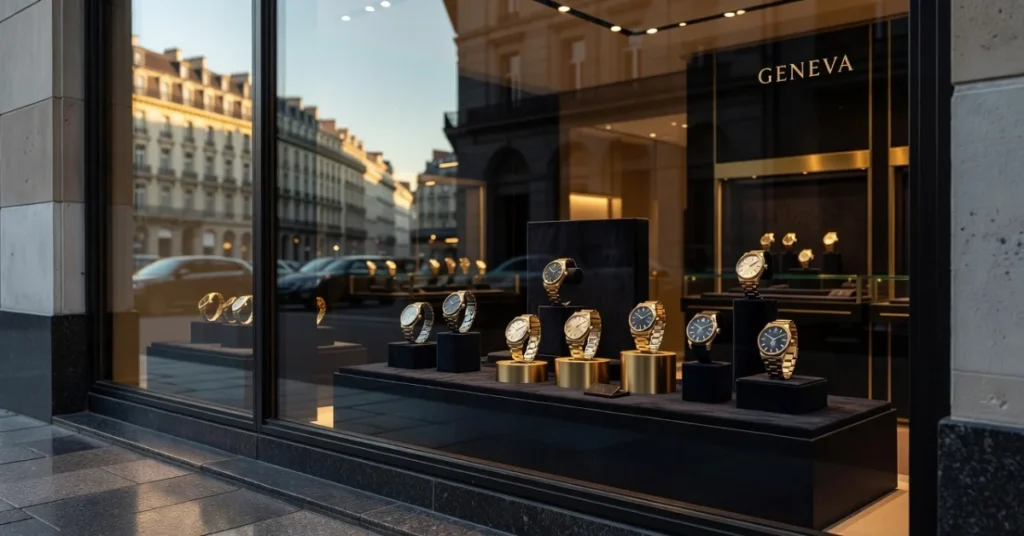
Walk into any boutique on Geneva’s Rue du Rhône and you’ll notice something odd. The watches in the window rarely have visible price tags. Swiss luxury watches don’t need them. The name on the dial already tells you what you’re paying for, and in 2026, that price has never mattered more to buyers trying to figure out where their money actually goes.
This isn’t a niche curiosity anymore. Collectors, first-time buyers, and even casual gift shoppers are asking the same question: why does a mechanical object with no battery cost as much as a small car? The answer sits somewhere between centuries of tradition and a very modern set of economic pressures.
What Makes a Watch “Swiss Luxury” in the First Place
Not every watch made in Switzerland qualifies as luxury, and not every luxury watch is fully Swiss. The label depends on strict rules around where movements are built, cased, and tested. A watch stamped “Swiss Made” has to meet legally defined manufacturing thresholds, not just carry a Swiss-sounding name.
That distinction matters because it protects buyers from imitation. Anyone who has shopped in a duty-free airport counter knows how many brands lean on Swiss aesthetics without the substance behind them. Real Swiss luxury watches trace their components, movements, and finishing back to specific cantons, many clustered in the Jura Arc region that’s produced timepieces since the 16th century.
The heritage angle isn’t marketing fluff either. According to industry records, watchmaking still ranks as Switzerland’s third-largest export sector, and the country produces only a small fraction of the world’s watches by volume while capturing the largest share of value. That gap between quantity and worth is the entire business model in one sentence.
The Craftsmanship Behind Swiss Luxury Watches
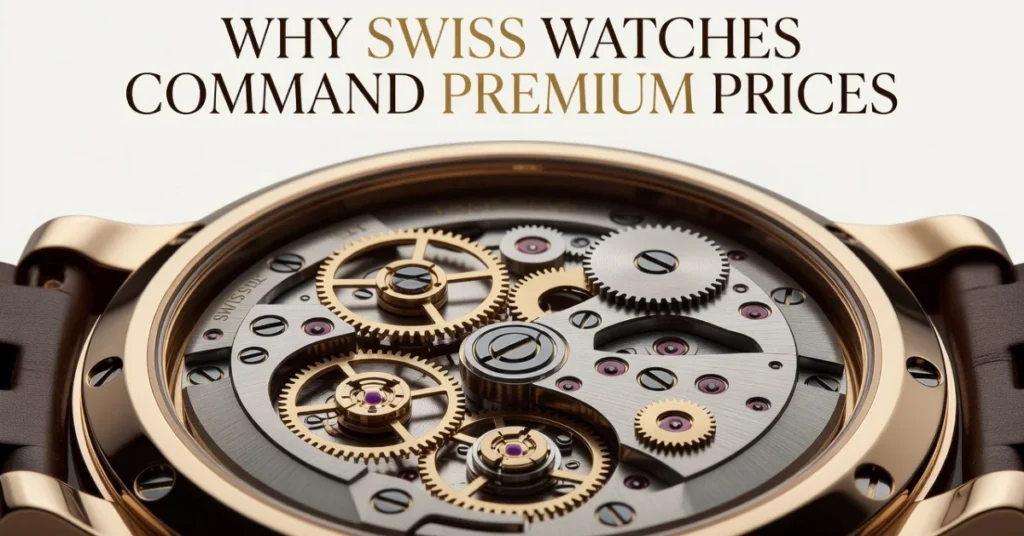
Anyone who has held a hand-finished movement under a loupe understands why the hours add up. A single mechanical caliber can involve hundreds of tiny components, each polished, beveled, and assembled by hand before a watchmaker even begins regulating it for accuracy.
Complications like tourbillons, perpetual calendars, and minute repeaters push that further. These aren’t gimmicks. They’re solutions to mechanical problems watchmakers have wrestled with since the 1700s, when figures like Abraham-Louis Breguet were refining the tourbillon to counter gravity’s pull on a moving watch. That lineage is part of why swiss luxury watches command respect that quartz alternatives rarely earn, even when the quartz version keeps better time on paper.
Finishing techniques such as Côtes de Genève striping or black polishing aren’t visible to most owners day-to-day, tucked as they are inside the case. Professionals in the trade will tell you that’s precisely the point. The work exists because craftsmanship, not visibility, defines the category.
Why Prices Keep Climbing in 2026
Buyers browsing swiss luxury watches this year are running into sticker shock that predates the actual purchase. Export data released in early 2026 showed Swiss watch shipments falling 1.7% in value through 2025, even as unit volumes dropped nearly 5%. That combination, fewer watches sold but value holding relatively steady, tells its own story about where the industry is protecting its margins.
Several forces are colliding at once. Gold prices reached record highs during the year, and the Swiss franc’s strength against other currencies made exports pricier abroad. On top of that, shifting U.S. tariff policy pushed brands to accelerate shipments ahead of duty increases. April 2025 alone saw a 150% jump in U.S.-bound shipments compared to the year before, as manufacturers and retailers front-loaded inventory before the anticipated tariff hikes landed. That single month explains a lot of the erratic swings buyers noticed in watch availability and pricing throughout the year.
Here’s how the regional picture broke down across 2025:
| Region | 2025 Export Change |
|---|---|
| United States | +0.3% |
| Europe | −0.3% |
| Asia (overall) | −3.8% |
| China | −12.1% |
| Hong Kong | −6.5% |
| Japan | −5.8% |
| United Arab Emirates | +3.5% |
| Saudi Arabia | +8.9% |
| Singapore | +0.7% |
Demand hasn’t collapsed everywhere, in other words. Markets like the UAE and Saudi Arabia posted solid growth even as China and Hong Kong saw sharp declines, part of a broader pullback that’s cut Chinese exports by more than a third over two years. Anyone tracking the secondary market has watched this play out in real time, with certain models holding value while others soften.
There’s a nuance most coverage misses here too. Export shipment figures measure what leaves Swiss factories, not what customers actually buy at the counter. That distinction matters this year specifically, because the two numbers tell different stories. While overall Swiss shipment values dipped, Richemont’s watchmaking division reported roughly flat to slightly positive sales at actual rates for the same period, and LVMH’s watches and jewelry division posted organic growth of around 3%. Shipments and real consumer demand aren’t the same thing, and treating them as interchangeable gives a misleading picture of how the category is actually performing at retail.
What the Research Shows
Detailed analysis of recent export patterns points to something more specific than a simple slowdown. Value has held up while unit volumes have slid, meaning brands are selling fewer watches at higher average prices rather than losing ground across the board.
That pattern puts pressure on the mid-tier price bracket, roughly the CHF 5,000 to 15,000 range, where many first-time luxury buyers typically enter the category. Industry watchers note that if brands keep protecting margin at the expense of that entry point, they risk narrowing the pipeline of future collectors who might otherwise trade up over a lifetime.
Employment figures back this up too. The sector’s workforce shrank by around 835 jobs in 2025, a decline of roughly 1.3%, the first such drop in recent memory. That’s a concrete signal the slowdown has reached beyond retail counters and into Swiss manufacturing towns themselves, not just a line item on an export report.
Choosing Your First Swiss Luxury Watch
First-time buyers often make the same mistake: chasing the most recognizable name instead of the movement quality underneath it. A less famous manufacture watch can outperform a flashier brand on finishing and accuracy for less money.
A few practical points worth checking before buying:
- Confirm the movement type (in-house versus outsourced) and whether it’s chronometer-certified
- Ask for full service history if buying pre-owned, since a missed service can affect resale value
- Compare authorized dealer pricing against grey-market listings before assuming you’re getting a deal
- Factor in strap and bracelet replacement costs, which add up over years of ownership
- Budget for long-term servicing, not just the purchase price
That last point trips up a lot of new buyers. Mechanical movements typically need servicing every five to seven years, and depending on the brand and complications involved, that can run anywhere from CHF 500 for a straightforward time-only piece up to CHF 1,500 or more for something with a chronograph or calendar function. It’s an ongoing cost of ownership that rarely shows up in the glossy brochure.
Non-technical buyers shouldn’t feel intimidated by any of this. Reputable boutiques expect these questions and will walk you through documentation without pressure. Enterprise gift-buyers and corporate clients, meanwhile, often work through dedicated concierge programs that streamline authentication and paperwork for bulk purchases.
The Investment Question
People keep asking whether swiss luxury watches are a smart investment, and the honest answer is: it depends entirely on the model. Certain references from a handful of brands have appreciated well past retail. Most others simply hold value reasonably if kept in good condition, which still beats most depreciating luxury goods.
Here’s a rough breakdown of what different price tiers typically deliver:
| Price Tier | Typical Buyer | What to Expect |
|---|---|---|
| CHF 1,000–5,000 | First-time luxury buyer | Entry steel models, in-house or reliable outsourced movements |
| CHF 5,000–15,000 | Growing collector | The squeezed middle tier, where brands are protecting margin per 2025 data |
| CHF 15,000+ | Established collector/investor | Complications, limited runs, stronger resale potential |
This is not financial advice, and nobody should buy a watch purely expecting a return. Those who have spent years in the trade will tell you the smartest buyers choose a piece they’d wear even if it never gained a franc in value.
Conclusion
The appeal of swiss luxury watches was never just about telling time. It’s about tradition, engineering, and a manufacturing standard that’s survived quartz crises, recessions, and now a genuinely uncertain 2026 export climate. Prices are rising for real reasons, tariffs, metal costs, and currency strength among them, but the craftsmanship underneath hasn’t changed. Whether you’re buying your first steel sports watch or eyeing something with a complication, understanding these pressures, from front-loaded tariff shipments to the real gap between shipment data and retail sales, makes you a sharper buyer, not just a bigger spender.
FAQs
Are Swiss luxury watches worth the price compared to other luxury brands?
It depends on priorities. Buyers focused on mechanical craftsmanship and long-term durability generally find the premium justified, while those wanting the latest tech features may prefer other categories entirely.
Why have prices risen so much through 2025 and 2026?
Record gold prices, a strong Swiss franc, and shifting U.S. tariff policy have all pushed manufacturing and export costs higher, and much of that gets passed to buyers.
Do Swiss luxury watches hold their value?
Some models do, particularly limited releases from a few well-known manufactures, but most watches are better viewed as long-term possessions rather than guaranteed investments.
What’s the difference between Swiss Made and Swiss luxury?
“Swiss Made” is a legal manufacturing standard about where components are produced and assembled. “Luxury” refers to positioning, price tier, and craftsmanship level, so not every Swiss Made watch qualifies as luxury.
Is buying pre-owned a safe way to enter this category?
Yes, provided you verify service history, authenticity, and buy through reputable dealers or certified marketplaces rather than unverified private listings.