How to plan a cross country road trip is a question that sounds simple until you open a map. The U.S. runs close to 2,800 miles from New York to Los Angeles on the most direct interstates. That’s a lot of road, a lot of fuel stops, and plenty of places to get stuck.
Here’s the deal. Most trips fall apart over small gaps. A booked-out motel. A dead phone signal. A tired driver at 2 a.m. This guide covers the gaps first-timers miss, from budget math to car checks to park rules in 2026.
How to Plan a Cross Country Road Trip: The Quick Answer
The short version: pick your dates and cap your daily miles. Sketch a route, price it out, and book the tight spots. Then service the car. Everything else is detail.
Here’s the nine-step version:
- Fix your travel dates and total trip length.
- Cap daily driving at five or six hours.
- Sketch a rough route with two or three anchor stops.
- Check weather and mountain pass seasons.
- Price fuel, beds, food, and fees with a cushion.
- Book only the stops that sell out.
- Service the car and pack a roadside kit.
- Download offline maps and share your route.
- Leave one free day for surprises.
The sections below unpack each step of how to plan a cross country road trip. Skip ahead if you’ve already nailed one.
Start With Days, Not Destinations
Most people open a map and pick landmarks first. Then they count whatever days are left. Flip that order. Decide how many days you can truly spare, then let the calendar choose your landmarks.
Veteran road trippers tend to cap driving at five or six hours a day. Beyond that, the scenery turns into a blur. At that pace, a coast-to-coast run usually takes seven to nine driving days, plus rest days.
A typical plan for a family going from Boston to San Diego looks like ten days. That’s seven driving days, two short days, and one full rest day. Nothing heroic. Just doable.
Check the calendar for trouble, too. A college graduation weekend can empty every motel in a small town. Holiday weekends and local festivals do the same. And keep one spare day in your pocket for weather, car trouble, or a detour too good to skip.
Choosing a Route: Why the Fastest Line Rarely Wins
Interstates are fast. They’re also the same fast-food exit every forty miles. The smartest routes mix both: highways for the long flat stretches, backroads for the parts worth remembering. Think of it like cooking. The interstate is the base, and the scenic detours are the spice. Route choice sits at the heart of how to plan a cross country road trip well.
Here’s how the two styles stack up:
| Interstate-first | Scenic-first | |
|---|---|---|
| Cell signal | Mostly steady | Patchy in remote areas |
| Fuel and food | Frequent stops | Long gaps between towns |
| Average speed | Faster | Slower |
| Best for | Tight schedules, long flat stretches | Views, local diners, slow days |
| Main risk | Boring, same exits | Low fuel or no signal |
Dead zones deserve real attention. Big stretches of Nevada, Wyoming, and the Dakotas have weak signal and long gaps between towns. Anyone who has watched a phone map freeze out there knows the feeling. Download offline maps for the whole route and keep a paper atlas in the glovebox.
Season matters as well. Early snow can close Rocky Mountain and Sierra passes in fall, and spring storms do the same. Check the forecast two days out, then again that morning.
How to Plan a Cross Country Road Trip Budget Without Guessing
Split the money into five buckets: fuel, lodging, food, fees, and a cushion. Start with fuel. It’s the only bucket you can calculate before you leave.
The formula is simple:
- Total miles, divided by your car’s miles per gallon, times the average price per gallon.
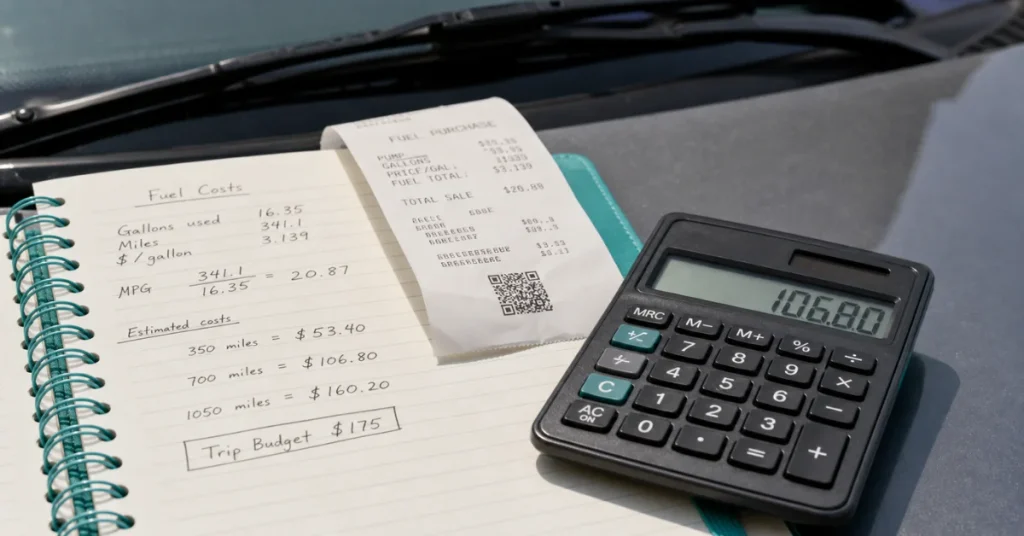
Here’s sample math with round numbers, not real pricing. A 2,800-mile trip at 28 miles per gallon burns 100 gallons. At $3.50 a gallon, that’s about $350. Your numbers will differ, so plug in your own.
Fees catch people off guard. Tolls, parking in big cities, and park entrance charges add up quickly. That’s why any good budget for how to plan a cross country road trip gives fees their own line. Rental cars often carry a one-way drop fee, so check it before you book. Electric vehicle owners should map fast chargers ahead of time and keep a backup within range.
Finally, hold a cushion of roughly 10 to 15 percent. It works like a spare tire. You hope to never touch it, and you’re glad it’s there when you do.
A Sample Week on the Road
Abstract advice only goes so far. Here’s how a seven-day western crossing might look for two drivers who want some sightseeing:
- Day 1: Long highway stretch, early motel, early dinner.
- Day 2: Half a day of driving, then a national park afternoon.
- Day 3: Scenic backroad day with a lunch stop in a small town.
- Day 4: Big desert crossing. Start at sunrise, finish before the afternoon heat peaks.
- Day 5: Short hop, laundry, groceries, and a slow evening.
- Day 6: Mountain pass day, weather checked twice.
- Day 7: Final push, with the free buffer day saved in case it’s needed.
Notice the rhythm. Every hard day is followed by an easy one. That pattern keeps tempers calm in the car, and it’s the same pacing seasoned road trippers swear by.
Booking Stops, Parks, and Beds Without Overplanning
Book the places that sell out and leave the rest open. That’s the quiet secret of how to plan a cross country road trip without overplanning it. That means small-town lodging on event weekends, national park lodges and campgrounds, and any stop with a timed-entry reservation.
Here’s a quick split of what to lock in and what to leave loose:
| Book ahead | Leave open |
|---|---|
| Park lodges and campgrounds | Quiet weeknight motels in small towns |
| Motels on event or holiday weekends | Lunch and dinner stops |
| Timed-entry parks | Scenic detours |
| One-way rental drop-off | Your buffer day |
Park rules vary by season. For 2026, Rocky Mountain National Park kept its entry system. It requires a booking during busy daytime hours, though you can enter earlier or later without one. Yosemite, Arches, Glacier, and Mount Rainier dropped their broad vehicle reservations. Check each park’s official page a few weeks before you arrive.
Why bother? Because drivers who show up at noon without a booking get turned around at the gate. It happens every summer. A free-cancellation bed is the cheapest insurance you can buy.
Everywhere else, stay loose. Some of the best nights on a long trip are the ones you book at 4 p.m. from a rest stop.
Time Zones, Altitude, and Other Things Maps Won’t Tell You
Some surprises never show up on a route line. Knowing them early is a real edge when you work out how to plan a cross country road trip.
Time zones. A coast-to-coast run crosses four of them, so your clock jumps three times. Check-in times, park hours, and dinner reservations all move with it. Heading west, you gain an hour each time. Heading east, you lose one, and that hurts on a long driving day.
Altitude and grades. Mountain passes mean long descents. Use a lower gear instead of riding the pedal, or the brakes can overheat. Altitude also brings headaches and fatigue for some people. Drink water and take it slowly on day one in the Rockies.
Wildlife at dusk and dawn. Deer and other animals move near rural highways at those hours. Keep your speed down and your eyes scanning the shoulders. It’s one more reason to be off the road by dark.
The half-tank rule. In remote areas, fill up when the gauge hits half. Stations can sit very far apart, and some close early. Anyone who has coasted into a dark Nevada town on fumes learns this once.
Tolls, Live Road Conditions, and Park Passes
Three small items save real money and real headaches.
First, tolls. Many roads in the East and some western cities now use cashless systems. Check each state’s toll rules before you go, and look at how your rental car handles transponder fees.
Second, live road conditions. Most states run a 511 traveler information service by phone or web. It reports closures, crashes, wildfire smoke, and snow on passes. Check it each morning before you pull out.
Third, the annual national park pass. For 2026, it costs $80 for U.S. residents, and a digital version is available. Visitors from abroad pay $250, and there’s an extra per-person fee at 11 of the busiest parks without a pass. If you plan to visit several fee-charging parks, a single pass often costs less than paying gate by gate. Run the math before you buy.
Car Prep and Safety Checks Before You Leave
Take the car to a mechanic two weeks before departure. Give them the route, not just the mileage. Car prep is the most overlooked part of how to plan a cross country road trip. Desert heat and mountain grades punish tired cars differently.
Your pre-trip checklist should cover:
- Oil and fluid levels, coolant, and wipers
- Tire pressure, tread depth, and a working spare
- Brakes and battery
- Roadside assistance coverage and proof of insurance
- A kit with jumper cables, flashlight, water, blanket, and first-aid supplies
Different travelers need different tweaks. Towing or RV trips call for shorter daily miles. Pet owners need a stop every couple of hours. Families with kids should schedule the longest stretches around naps. Solo travelers should text a friend their location each night.
Pack one bag per person, plus a small day bag close at hand. Fill it with chargers, snacks, water, sunscreen, and a warm layer.
What the Research Shows About Fatigue on Long Trips
Fatigue is the quiet risk of any long trip. Any honest guide on how to plan a cross country road trip has to cover it. U.S. traffic safety data estimates that 91,000 police-reported crashes in 2017 involved drowsy drivers. Those drowsy driving crashes injured about 50,000 people and killed nearly 800. Safety experts agree that’s an undercount.
The pattern is telling. Crashes cluster between midnight and 6 a.m. and again in the late afternoon. They often involve a lone driver on a rural highway. That describes half of a cross-country itinerary.
Public health researchers found that turning up the radio or opening a window doesn’t keep drivers alert. Warning signs include frequent yawning, missed exits, and drifting in your lane. The only fix is to pull over and rest, or swap drivers.
So shape your day around that. Start early, eat lunch off the highway, and be in bed before dark. Two drivers should switch every two to three hours.

Final Thoughts on How to Plan a Cross Country Road Trip
Knowing how to plan a cross country road trip comes down to three habits. Keep days short. Book only what sells out. Service the car before you go. Everything else bends.
Honestly, the planning is half the fun. Lay the map on the table, argue over detours, and circle one place nobody’s heard of. Then leave a blank day on the calendar. That’s usually the day you’ll remember most.
As of 2026, park rules and fuel prices keep moving, so recheck the details the week you leave. Pack the atlas, charge the phone, and go.
FAQs
How many days does a cross country road trip take?
Most relaxed trips run seven to ten days of driving. Two drivers pushing hard can cut that to four or five. But you’ll miss most of what makes the trip worth taking.
What’s the first step in how to plan a cross country road trip?
Pick your dates and daily driving limit first. Those two choices decide your route, your budget, and how many beds you’ll need.
How much does a cross country road trip cost?
It depends on your car, route, and sleeping choices. Calculate fuel from your own mileage, then add lodging, food, fees, and a 10 to 15 percent cushion.
What’s the best time of year for a cross country road trip?
Late spring and early fall usually balance weather and crowds. Summer brings desert heat and packed parks. Winter risks mountain pass closures.
Do I need reservations for national parks?
Some parks do, and rules vary by year. Check each park’s official page a few weeks before you arrive, and book lodging early either way.